Memory· Long-Form Article
Coming Home Through Gborodigondi
A viral TikTok clip of a twenty-year-old Nsukka music video pulls a childhood memory back into focus
By Nneoma Sally· 7 min
Search and filter across articles, codex entries and podcast episodes on myth, folklore and cultural memory.
A viral TikTok clip of a twenty-year-old Nsukka music video pulls a childhood memory back into focus
By Nneoma Sally· 7 min

A flute I dismissed as too archaic to notice stopped me mid-stride on an NYSC parade ground
By Nneoma Sally· 6 min
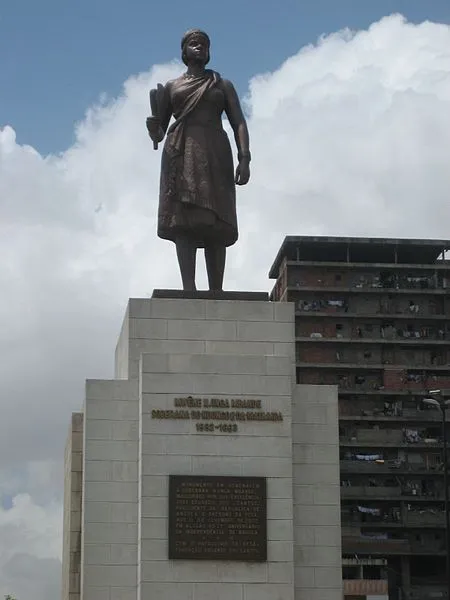
Discover the story of Queen Njinga, the fearless ruler who used diplomacy, warfare, and political strategy to resist Portuguese expansion and defend her kingdom.
By Nneoma Sally· 10 min
How a nation forged in liberation became a continent's most violent rebuke of it.
By Somtochukwu Udeozo· 8 min
On Maryam Yusuf Magaji's Poems in Vistas
By Shalom Kasim· 24 min

In A Man of the People, Chinua Achebe dissects the culture of patronage, corruption, and political spectacle that defined the First Nigerian Republic, a system whose internal contradictions would soon erupt in the 1966 Nigerian coup d'état.
By Shallom Paul· 9 min

While Nigerian families watched the news in safety, the state was busy breaking its social contract with 276 girls through strategic denial.
By Nneoma Sally· 4 min

Staying home in Lagos was hard and strange, but it also gave me time to notice the little things.
By Adédoyin Àjàyí· 5 min

A personal narrative as an undergraduate student at the University of Maiduguri in 2015, during the height of the Boko Haram insurgency in northeastern Nigeria.
By Sunday Stephen Laabes· 9 min

When a moth infestation wiped out tomato supply, Nigerians were forced survive on improvisations.
By Somtochukwu Udeozo· 7 min

From self-funding to self-taught development, this is a behind the scenes reflection on what it has taken to keep Oriire alive and why community support is now essential to preserve and protect African mythology for the future.
By Sesi Morgan· 5 min

A lot of things have happened in November so far. The most interesting ones for me are the Eurobond issued by the FG, S&P's upward review of Nigeria's economic outlook, and the MOWAA protests. All of these tie to our prompts.
By Shalom Kasim· 4 min

Zeb Ejiro's Domitilla followed a young woman selling sex to survive in a Lagos gutted by Nigeria's Structural Adjustment years. Beneath its melodrama, the 1996 film preserves how women bore the weight of economic collapse, and it stands today as an archive of the decade itself.
By Precious Peters· 5 min

While Western society was busy telling women to stay in the kitchen, Yoruba women were out running the markets, controlling the wealth, and holding so much power that not even a king could tell them what to do. The question is how?
By Inumidun Seyiolapade· 11 min

Are you one of the people who think Timbuktu is a mythical land of desert and dust? Think again, because this place was an old-time Silicon Valley that valued books more than cars and had a decentralized library system as the best cloud storage network a city could ask for.
By Inumidun Seyiolapade· 14 min

Women are prominent in the most important aspects of life in Akan Society. Explore how decisions in defense, trade, politics and familial matters are determined by women.
By Shallom Paul· 7 min

Long before colonial rule, Nigerian women held real political and spiritual power, and no Yoruba king could be installed without the blessing of female chiefs like the Iyalode. From the Umuada of Igboland to the kingmakers of old Oyo, women governed and judged within their own communities.
By Ogundeko Toluwanimi Alexis· 6 min

The Agojie were an all-female regiment who guarded and expanded the kingdom of Dahomey, sworn to celibacy and trained from girlhood to fight. Known to their own people as Mino, "our mothers", they met French colonial troops on the battlefield and became legend across West Africa.
By Precious Peters· 7 min

Waakye (pronounced “wah-chay”) isn’t just rice and beans; it’s a Ghanaian classic with a story to tell. This article highlights its many variations and traces how the dish journeyed across the Atlantic, leaving its mark on food cultures far beyond Ghana.
By Inumidun Seyiolapade· 15 min

How has West Africa dealt with its role in the history of slavery? This article reflects on Emancipation Day and looks at the need for open dialogue and renewed connection with the global Black diaspora.
By Somtochukwu Udeozo· 14 min

Brazil's dance-fight of music and disguised blows did not begin in Brazil. It grew from Engolo, a combat-dance of Angola that enslaved Africans carried with them across the Atlantic.
By Akunna Danugwu· 7 min

Ever seen those gorgeous geometric patterns in movies about Haiti? Those aren't just fancy floor decorations—they're vèvè, the spiritual calling cards of Haitian Vodou. This article will delve into the evolution of these ground drawings, from their potential roots in Dahomean traditions to their sacred and symbolic role in contemporary Haitian Vodou.
By Inumidun Seyiolapade· 9 min

The Vai script is one of West Africa's best-documented ancient writing systems, and thanks to this remarkable fit, modern historians and the Vai people themselves can trace their origins and understand their ancestral way of life.
By Nneoma Sally· 10 min

Despite the hardships of the slave trade, African spiritual traditions endured, carefully preserved and passed down through generations. Today, several religions stand as powerful testaments to the resilience and intentional efforts of diasporic communities to uphold their cultural and religious heritage.
By Gbenga Salvador· 5 min

Centuries of migration, enslavement, and resettlement have spread Africans—and their food—across the globe. It's fascinating to see how dishes from distant countries share striking similarities, yet reflect subtle local twists.
By Ogundeko Toluwanimi Alexis· 6 min

Founded by the Ife prince Oranmiyan, the Oyo Empire grew from a single savanna town into the dominant Yoruba power, its cavalry ranging from the Atlantic coast to the Sahel. At its height in the 17th and 18th centuries, it forced even Dahomey to pay tribute before its long decline.
By Miracle· 5 min

Deep within central Nigeria, an ancient civilization once flourished, leaving behind a legacy as mysterious as it is captivating. Known as the Nok culture, this society thrived between 1500 BCE and 500 CE, predating many prominent civilizations in sub-Saharan Africa.
By Miracle· 6 min

In the 16th century, the Nupe pushed south into Edo country, set on conquest and leaving Islam in their wake. The Esan, a people of thirty-five kingdoms known as skilled warriors and herbalists, stood in their path.
By Stacey Osalumhense· 11 min

Yaa Asantewaa is a formidable female personality in Ghanaian history. This article delves into her life, the sociopolitical context of her time, her legendary leadership during the war, and her enduring legacy.
By Jemima Oluwaseun· 6 min

Olumo Rock, located in Abeokuta, Nigeria, is a historic landmark and symbol of Egba resilience. The rock served as a refuge for the Egba people during 19th-century inter-tribal wars. Lisabi Garden, the Cave, and the Peak comprise Olumo Rock, each telling stories of Egba history and culture. Today, Olumo Rock represents the Egba people's unwavering determination and cultural heritage.
By Gloria Anefu· 6 min

Nigeria's economy once thrived on agricultural exports, particularly cocoa and groundnuts. This article explores the rich history of these products and how they contributed to the country's economy before the oil boom.
By Ogundeko Toluwanimi Alexis· 5 min

Tracing the mathematical development from the Nile to the Niger reveals a rich heritage in Africa, with ancient civilizations like Egypt demonstrating advanced knowledge in geometry and arithmetic, while the empires of Ghana, Mali, and Songhai contributed to mathematics through manuscripts covering diverse fields. Despite colonial disruptions, contemporary initiatives aim to revive indigenous mathematical traditions, showcasing Africa's ongoing role in global mathematical discourse.
By Olubayo Stephen· 4 min

It is about the history of Warfare and its evolution in Pre-colonial West African States through the revolutionary discovery of horses as weapons of war
By David Olushola· 16 min

British rule reached Yorubaland and rewrote how it was governed and schooled, replacing kings with warrant chiefs and shrines with missionary classrooms. Yet Yoruba society absorbed the shock, carrying its language and identity through the upheaval.
By Aderinsola Aberuagba· 6 min

The Bantu dispersal across sub-Saharan Africa had a profound impact on the continent's culture, language, history, and education. The migration of the Bantu people influenced the formation of diverse societies, the spread of Bantu languages, the development of political entities, and the transmission of knowledge, leaving a lasting legacy on African heritage and contributions to the world.
By Olubayo Stephen· 6 min

Across Africa, symbols carried meaning long before the printing press. Adinkra, hand-carved onto Ashanti cloth to stand for wisdom and proverb, and Nsibidi of Igbo land were two systems that recorded thought in form rather than alphabet.
By Olubayo Stephen· 4 min

Long before Europe credited itself with inventing modern diplomacy at Westphalia, the Oyo, Dahomey, Benin, and Kanem-Bornu empires were already managing treaties and the balance of power among themselves. Between 1600 and 1800, West African statecraft built and toppled empires through negotiation as much as war.
By David Olushola· 15 min

Hubert Ogunde, a visionary filmmaker born in Ososa Ijebu, Nigeria, revolutionized Nigerian cinema with his groundbreaking films and theatrical performances. Through his commitment to authentic storytelling, cultural preservation, and social change, Ogunde's legacy continues to inspire artists and audiences, leaving an enduring impact on Nigerian cinema and the wider world of film.
By Babadasoola· 9 min

This passage highlights the emergence of Black feminism in Africa, particularly associated with Pan-Africanism. Women in Nigeria played pivotal roles in protests against colonial interference, giving rise to a formidable type of feminism. Funmilayo Ransome-Kuti, a prominent figure in Nigerian feminism, founded the Abeokuta Ladies' Club and led major protests against women's taxation and the monarchy. Her activism extended to national and international levels, earning her honors and recognition f
By Olúwábùkúnmi Abraham Àwóṣùsì· 12 min

When King Ewuakpe of Benin lost the loyalty of his people, his wife Queen Iden offered her own life as the sacrifice that would restore the throne. Hers is one of the rare stories to sing a Benin woman's part in holding the kingdom together.
By Grace Oshiname· 14 min

The musical life of Àyìnlá Ọmọwúrà is chronicled in this article which examines his music, life and impact. An Apala musician from Abeokuta, Ayinla's music discussed various societal ills.
By Olúwábùkúnmi Abraham Àwóṣùsì· 7 min

Music has long been a tool for resistance and protest in Africa. Throughout history, African musicians have used their art to express political dissent, challenge oppressive regimes, and promote social change.
By Olubayo Stephen· 5 min

African history has been shaped by numerous women who have made significant contributions in various fields. Despite facing numerous challenges and barriers, these women have emerged as leaders, pioneers, and trailblazers, breaking stereotypes and paving the way for future generations of women.
By Olubayo Stephen· 5 min

The Yoruba people are an ethnic group that originated in West Africa, specifically in present-day Nigeria and Benin. However, their influence and traditions have spread far beyond their place of origin, including to South America. The Yoruba culture, and its associated religions, has played a significant role in shaping the societies and cultures of many South American countries, particularly Brazil, Cuba, and Trinidad and Tobago.
By Olubayo Stephen· 3 min

The evolution of currency in West Africa spans centuries and encompasses a wide range of cultures and civilizations. From bartering to cowrie shells, beads, metal objects, European currencies and now digital currencies like Bitcoin. The use of foreign currencies, particularly the US dollar, remains widespread in West Africa, and digital currencies offer a number of advantages over traditional forms of currency, including lower transaction costs and increased security.
By Olubayo Stephen· 3 min

African art became an instrument of aesthetics, an embellishment of worth and cultural glorification, as well as an exploration of anthropological details and the globalisation of African cosmology.
By Olubayo Stephen· 6 min

The Mau Mau Uprising is another African history relating to the national activist movement for freedom in Kenya. It was a bloody war of liberation that lasted from 1952 to 1963 and is said to be the foundation of Kenyan independence.
By Imisioluwa Ogunsunlade· 4 min

It is surprising how much similarity is yet to be uncharted between the African diaspora and the motherland. Here, therefore, we try to draw a nexus between the Brazilian Acaraje and Nigerian Àkàrà.
By Imisioluwa Ogunsunlade· 7 min

Pioneered by women from the Owerri and Calabar provinces of south-eastern Nigeria, the “Women’s War” in Igbo history or the “Aba Women’s Riots of 1929” in British colonial historywas an immense rejoinder to the oppressive and repressive administration of the British colonial administrators in south-eastern Nigeria. This riot became one of the meanest challenge against British rule in the colony and an epochal case of feminist thought and tendencies as well as anti-colonial revolt.
By Imisioluwa Ogunsunlade· 4 min

The advent of the European world left Africa with little or no choice. It was indeed a brutal condition of either immediate adaptation or cultural annihilation. Therefore, the question that remained pertinent in the minds of early writers was the issue of African autonomy and cultural splendor.
By Imisioluwa Ogunsunlade· 20 min

From white colonizers to contemporary pop culture
By Sena Voncujovi· 10 min

A people's culture is the sum of their collective knowledge, passed down for generations and added on to with time. They learn by seeing what has worked and noting down what has not and ensure that future generations can learn from the mistakes of their elders.
By sesi-morgan· 2 min

The Mijikenda are nine distinct ethnic groups that migrated from inland East Africa to the Kenyan coast. Ari joins this episode to walk through the migration story, and what the nine groups still have in common.

From the kingdoms of Axum and the rock-hewn churches of Lalibela to today's headlines about the Horn of Africa. Tam joins this episode for a walk through Ethiopia's history.

The Dahomey Amazons were the all-female warrior regiment of pre-colonial West Africa, fighting alongside (and often outperforming) the men. Massoud joins this episode to tell their story.

Africa is home to thousands of ethnic groups, and that diversity has shaped borders, alliances, and conflicts for centuries. This episode looks at where those groups came from and how they've sorted themselves over time.

Abigail takes this episode on a tour of Africa and the diaspora, stopping in different cities to look at what each community has carried over from home.

African spices don't show up evenly across the continent. This episode goes country by country, naming the ones each region cooks with most, and the dishes they end up in.

Before colonisation, Africa was home to some of the most sophisticated cities of their time. Seyram and Bryan of @africasuntoldstories join this episode to travel through Great Zimbabwe, Timbuktu, Djenne-Djenno, and Benin City.

Yoruba is spoken in West Africa, and shows up inside the religious vocabularies of Brazil and Cuba. Wale joins this episode to walk through the journey, and the dialects.

Kayanmata is the Hausa set of practices tied to femininity and to the way women hold power inside marriage. Mojisola joins this episode to talk about the practice and why it continues to provoke debate.

Today, land is mostly talked about as wealth and an investment. That isn't how Africans always thought about it. Imisi joins this episode to talk about what land meant before money got involved.

Queen Moremi is a name most Yoruba children know, even if the full story has been blurred by retellings. This episode goes back to who she was and why Ile-Ife still owes her.