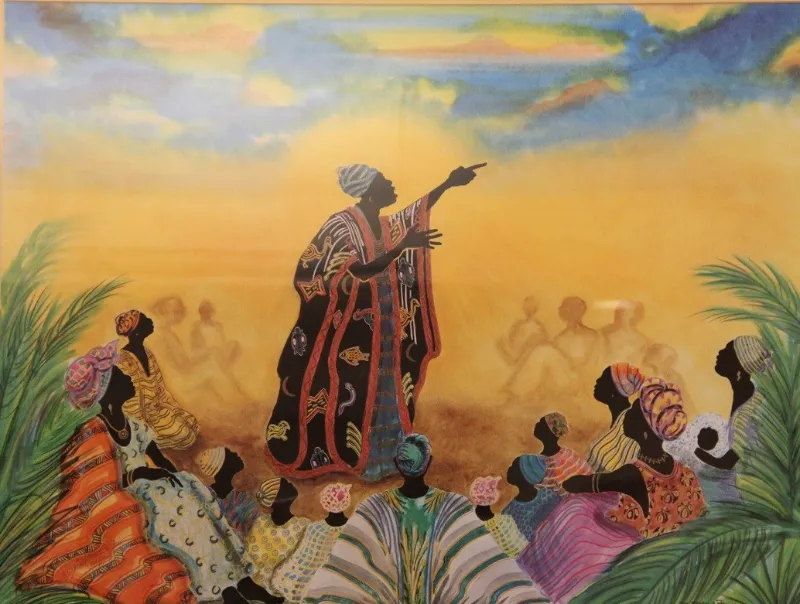
For most Westerners, Timbuktu might as well be located somewhere between Narnia and Middle Earth. The phrase "from here to Timbuktu" has become shorthand for the middle of nowhere, which is unfortunate because this reputation for being impossibly remote is about as accurate as calling the internet a fad. For hundreds of years, Timbuktu was the Silicon Valley of the medieval world, except instead of coding apps, they were collecting books, and instead of venture capital, they had actual capital flowing through their markets in the form of gold, salt, and ivory.
The city sits on the southern edge of the Sahara Desert in what is now Mali, positioned like a shrewd real estate developer's dream at the crossroads of trans-Saharan trade routes. During its golden age in the 15th and 16th centuries, scholars traveled from across the known world to study there, making it a sort of medieval Harvard, but with better weather and considerably more camels.
The irony of Timbuktu's current reputation as the world's most famous remote location is that Europeans knew exactly where it was for centuries. It appeared on the Catalan Atlas as early as 1375, which means medieval European cartographers had better geographical knowledge than many people today who think Africa is a country. The city only became "lost" when European powers discovered they could sail directly down the African coast instead of trekking across the Sahara, effectively cutting out the middleman and, in the process, somehow managing to lose track of one of the world's great centers of learning.
This geographical amnesia transformed a vibrant commercial hub into a metaphor for the unreachable, which is roughly equivalent to future civilizations thinking Silicon Valley was a mythical place where people worshipped fruit-themed electronics. The difference is that while Silicon Valley produces apps that track your coffee consumption, Timbuktu produced something far more lasting: hundreds of thousands of manuscripts that would make the Library of Alexandria weep with envy.
When Mansa Musa Made it Rain (Books)
The foundation of Timbuktu's intellectual empire can be traced to one man's very expensive pilgrimage. Around 1324, Mansa Musa, ruler of the Mali Empire, decided to make the journey to Mecca. This wasn't your typical religious retreat. Mansa Musa's pilgrimage was the medieval equivalent of a tech billionaire's space trip, except instead of achieving twelve minutes of weightlessness, he managed to crash the gold market in Cairo for a decade.
But Mansa Musa didn't just return with stories and a depleted treasury. He brought back scholars and books from across the Islamic world, essentially conducting the greatest academic recruitment drive in African history. He commissioned mosques and established learning institutions that would transform Timbuktu from a trading post into an intellectual powerhouse.
By the 15th and 16th centuries, when the Songhay Empire controlled the city, Timbuktu had become the academic equivalent of a startup that actually succeeded. The city housed the Sankore University and numerous other schools, with an estimated 25,000 students comprising a quarter of the population. To put this in perspective, that's a higher student-to-resident ratio than most modern university towns, except these students were studying everything from Islamic law to astronomy while the local economy was built on gold and salt rather than pizza delivery and cheap beer.
In this scholarly society, books weren't just educational tools; they were status symbols more coveted than luxury cars. Historical chronicles mention book acquisition more frequently than mosque construction, which is saying something in a deeply religious society. Owning a substantial library was the medieval equivalent of parking a Ferrari in your driveway, except books were considerably more useful for actual learning and significantly less likely to break down in the desert.
Into the Business of Knowledge
One of the most peculiar and ultimately brilliant aspects of Timbuktu's intellectual tradition was its approach to library management. Unlike other great Islamic centers such as Cairo or Fez, which maintained large public libraries, Timbuktu operated on a family-based system where manuscripts were passed down through generations like precious heirlooms. This might seem counterintuitive for a center of learning, but it proved to be an accidental stroke of genius.
The scholarly elite who controlled these collections weren't hoarding knowledge out of selfishness; they were operating the world's first distributed backup system. When the Moroccan army invaded in 1591 and ended Timbuktu's golden age, they couldn't simply march into a single building and destroy the city's intellectual heritage. The manuscripts were scattered across hundreds of private homes like a medieval version of cloud storage, except the cloud was made of families who understood the value of what they possessed.
This decentralized approach proved equally effective during French colonization in the 1890s. While colonial authorities managed to plunder many texts, countless others remained hidden in family homes, protected by a network of custodians who understood that knowledge, unlike gold, becomes more valuable when shared but must sometimes be hidden to survive.
The families who maintained these collections weren't just librarians; they were the guardians of a civilizational memory that would prove more durable than empires. Their seemingly insular system created an intellectual inheritance that survived invasions, colonization, and centuries of political instability.
Welcome to The World of Books
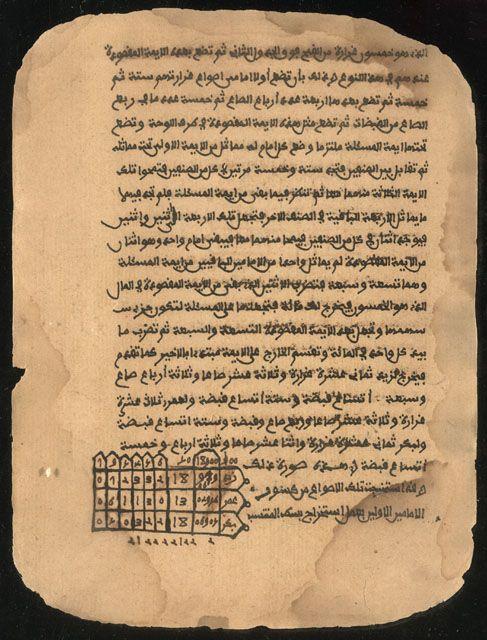
The true marvel of the Timbuktu manuscripts lies not just in their survival, but in their content, which reads like a medieval Wikipedia written by scholars who weren't particularly concerned about offending anyone's sensibilities. Written predominantly in Arabic, with some texts in local African languages using Arabic script, the collection covers everything from Islamic law and medicine to poetry and astronomy. But nestled within this scholarly corpus are texts that would make modern fundamentalists reach for their matches.
The manuscripts reveal a version of Islamic civilization that was refreshingly comfortable with complexity and contradiction. Alongside treatises on religious law, one finds detailed instructions for casting horoscopes, catalogues of spells and incantations, and texts dealing with black magic and necromancy. This wasn't a bug in the system; it was a feature, reflecting a worldview where science and mysticism coexisted like roommates who had learned to tolerate each other's quirks.
- Science meets fortune telling
Many manuscripts demonstrate a sophisticated understanding of astronomy inherited from Greco-Roman sources and developed by Muslim scholars. Texts like Knowledge of the Movement of the Stars and What it Portends in Every Year contain detailed diagrams of celestial mechanics alongside instructions for calculating seasons and navigating the Sahara. So far, so scientific. But these same texts also provide comprehensive guidance on casting horoscopes and various forms of divination, because apparently medieval scholars saw no contradiction between understanding planetary motion and predicting whether Tuesday would be a good day to launch a caravan.
This integration of rigorous scientific observation with mystical interpretation reflects a culture that was comfortable with ambiguity and multiple ways of knowing. It was a far cry from the rigid fundamentalism that would later attempt to destroy these very texts, demonstrating that tolerance and intellectual curiosity were once defining characteristics of West African Islamic scholarship.
- Fancy necromancy
Beyond astronomy-based fortune telling, the manuscripts delve into realms that would make modern religious conservatives deeply uncomfortable. There are texts on the mystical deeds of saints, detailed spell catalogues, and specific instructions for necromancy. These weren't fringe subjects tucked away in dusty corners; they were part of the mainstream intellectual tradition, reflecting a Sufi-influenced version of Islam that embraced the mysterious and supernatural as legitimate areas of study.
The existence of these texts serves as a direct rebuke to contemporary extremist claims about Islamic purity and historical authenticity. The scholars of Timbuktu would likely have found modern fundamentalist interpretations of their religion as puzzling as finding a smartphone instruction manual written in hieroglyphics.
- Scandalous sex-ed
Perhaps the most eye-opening discovery in the archives is a manuscript titled Advising Men on Sexual Engagement with their Women, which provides the kind of frank discussion about sexuality that would make contemporary sex education advocates weep with joy. The text includes recipes for aphrodisiacs, fertility enhancers, and specific Koranic verses recommended for intensifying and prolonging orgasms, which is probably not what most people expect to find in medieval Islamic scholarship.
This text represents an extraordinary acknowledgment of mutual sexual pleasure and open discussion of human sexuality, reflecting what scholars describe as an "easy-going version of Islam" that was remarkably liberal in its social attitudes. The manuscript's frank treatment of sexual pleasure stands in stark contrast to the prudish interpretations promoted by modern fundamentalists, who have demonstrated their horror for such topics by attempting to destroy the cultural heritage that contains them.
The sexual advice manual isn't an outlier; it's part of a broader intellectual tradition that was comfortable discussing human nature in all its complexity. This pre-modern understanding of sexuality and relationships represents a sophistication that many contemporary societies are still struggling to achieve.
The Heist of The Century
The enduring value of these manuscripts became dramatically apparent in 2012 when Al-Qaeda-linked militants seized control of Timbuktu. These extremists, armed with an interpretation of Islam roughly as nuanced as a sledgehammer, viewed the city's intellectual heritage as an affront to their ideology. They threatened to destroy not just the manuscripts, but also the historic shrines and libraries that housed them, because nothing says "religious purity" like burning books that predate your organization by several centuries.
Faced with the imminent destruction of their cultural heritage, a network of local citizens conceived and executed what can only be described as the most important library heist in human history. The operation was led by Abdel Kader Haidara, a librarian and book collector, working from the relative safety of Mali's capital, Bamako, while his nephew Mohammed Touré risked his life on the ground in occupied Timbuktu.
- The Great Book Smuggling Operation
The rescue operation was an eight-month logistical masterpiece that makes Ocean's Eleven look like a straightforward bank withdrawal. More than 350,000 manuscripts had to be secretly moved from various libraries and private collections throughout the city to a network of safe houses, all while avoiding detection by militants who had demonstrated their enthusiasm for destroying anything that didn't match their worldview.
The team used empty book boxes as decoys, leaving them in place to fool the occupiers into thinking the collections remained intact. Meanwhile, the actual manuscripts were being packed into metal crates and smuggled out of the city by jeep, canoe, and cart, often hidden under crates of fruit and vegetables. This gave new meaning to the phrase "knowledge is power," because in this case, knowledge was literally being powered by produce trucks and river boats.
Mohammed Touré's experience on the ground reads like a thriller novel, except the stakes were civilizational rather than personal. He was repeatedly stopped at checkpoints, harassed by militants, detained for twenty-four hours, and forced to pay bribes for his freedom. Each trip south to Bamako carried the risk of discovery, imprisonment, or worse, but he continued because the alternative was watching centuries of accumulated wisdom go up in smoke.
- Teamwork Makes The Dream Work
What makes this rescue operation particularly remarkable is that it wasn't the work of a few individuals or some international organization; it was a grassroots effort involving hundreds of ordinary Malians from all walks of life. Taxi drivers, merchants, fishermen, and housewives all played roles in the elaborate smuggling network that moved the manuscripts to safety. This wasn't just about saving old books; it was about preserving a piece of their identity that extremists had deemed incompatible with their vision of religious purity.
The operation succeeded beyond anyone's reasonable expectations. Over ninety-five percent of the manuscripts were saved, which is a better success rate than most government programs manage when they're trying to deliver mail, let alone preserve priceless cultural artifacts during a war. The militants did manage to burn thousands of manuscripts at the Ahmed Baba Institute as they fled ahead of French forces, but this represented a small fraction of the total collection.
How Preservation is Working Out
The story didn't end with the manuscripts' arrival in Bamako. In a twist that demonstrates how preservation is an ongoing challenge rather than a one-time victory, the documents now face a different threat: the climate. Bamako's humid environment is far less suitable for manuscript preservation than Timbuktu's arid desert conditions, which means the texts that survived centuries of political upheaval might succumb to moisture and mold if not properly cared for.
This new challenge has sparked a global preservation effort involving organizations like the Library of Congress and Google Arts & Culture, working alongside Malian scholars to conserve, catalogue, and digitize the collection. Over forty thousand pages have been made digitally available for the first time, which means scholars worldwide can now access texts that were previously known only to a handful of families in Mali.
The digitization effort represents a new phase in the manuscripts' evolution from private family inheritance to global cultural heritage. These documents, which began as the property of individual scholars and families, then became symbols of national resistance, are now taking their place as part of humanity's shared intellectual legacy.
And that’s What Knowledge Brings
The Timbuktu manuscripts provide irrefutable evidence of a sophisticated African literary tradition that challenges multiple forms of ignorance simultaneously. They demolish Eurocentric narratives that portray medieval Africa as intellectually barren, while also contradicting fundamentalist claims about Islamic historical purity and authenticity.
The "occult secrets" and surprising contents of these manuscripts aren't curiosities; they're integral parts of a complex, pluralistic intellectual tradition that was comfortable with ambiguity, mystery, and multiple ways of understanding the world. The medieval scholars of Timbuktu would likely be baffled by contemporary attempts to reduce their rich, multifaceted civilization to a single, rigid interpretation.
These documents force a reevaluation of what we think we know about Islamic history, African intellectual achievement, and the relationship between science and spirituality in medieval societies. They reveal a world where astronomers cast horoscopes, religious scholars wrote about sexual pleasure, and Islamic learning encompassed everything from mathematics to necromancy without anyone seeing a fundamental contradiction.
The fight to preserve these manuscripts has evolved from a physical rescue mission to a race against time and environmental degradation, but the underlying stakes remain the same: protecting a form of knowledge that demonstrates the complexity and sophistication of human intellectual achievement. In an age when simplistic narratives and fundamentalist interpretations threaten to flatten our understanding of history and culture, the Timbuktu manuscripts stand as a reminder that reality has always been more interesting, more complex, and more tolerant than extremists of any stripe would have us believe.
The scholars of medieval Timbuktu created something that has survived invasions, colonization, ideological extremism, and the simple passage of time. Their books have outlasted the empires that tried to destroy them, which suggests that in the long run, knowledge really is more durable than power, even when that knowledge includes instructions for love potions and conversations with the dead. Perhaps that's the most important lesson these manuscripts offer: that intellectual curiosity, tolerance for complexity, and the courage to preserve what matters can outlast any attempt to impose simplistic orthodoxy on the rich chaos of human experience.