The digital resurgence of an old childhood memory can serve as a bridge for young people trying to find their way back to the meaning of their identity or heritage. That is what happened when I stumbled across a viral clip of "Gborodigondi" by the late lecturer and musician Uchenna Okoro Fidelis (known to most as Fidoko) circulating on TikTok. Set against the unmistakable topography of Nsukka, the resurfaced clip struck a sudden note of recognition and pulled me back toward a piece of the town's forgotten past. What follows is that encounter, worked through with oral testimony and closer research into Nsukka culture: a breakdown of the song's lyrical meaning, its dress and choreography, its indigenous instrumentation, and the landscape it was filmed in.
As "Gborodigondi" played on a loop on my phone, I started noticing how much was folded into Fidoko's use of localised Igbo adages: verses that, on closer listening, address real social and political grievances that were live in Nsukka at the time, some of which are still spoken of uneasily in town today.
The song opens with an intense, repeated vocal invocation, Fidoko calling out to his mother in a tone closer to a wail than a greeting, begging her to listen. To me, the gesture mirrors the performative role of a village town crier, the way a chief priest or elder's urgent message travels through a single raised voice to the rest of the community. It brought to mind Chinua Achebe's depiction of the town crier in Arrow of God, striking the ogene to summon his people to listen.
That cry gives way to a herald built from localised Nsukka-Igbo idiom, carrying Fidoko's longing to come home and, beneath it, the psychological toll of migration: what it costs young people to leave the familiarity of their own culture behind. The strain surfaces in lines like the repeated, almost desperate "Ke m larume alaru me" ("Let me come home"), or the image comparing constant English in a foreign land to the physical grind of pounding yam: "N'oyigbo buru utara n'asutaram n'ike, mama." Elsewhere he plays on dialect to make a claim about integrity — "N'amago mu eshi ngwo, mama. Ma mu amago eshi ngwongwo n'aobu amagom a ngwo gwo" — saying, in effect, that he may know how to cook traditional porridge yam, but he does not know how to cook up lies. These were the lines that first told me this wasn't an ordinary song; it was doing the work of documenting what it feels like to navigate the white man's land while holding onto a native identity.
From there, the chorus shifts into the beat of the Ekwe Mma (a locally made xylophone) and the Ichaka (gourd rattles). Each verse raises an issue more serious than the one before it, and the female backing vocalists answer with exclamations that give the chorus its real weight, most often triggered by Fidoko's refrain, "N'odigu ta oyi uhogbu" ("Is it good the way it is?"), a phrase whose onomatopoeic play gives the song its title.
The tone then turns from personal nostalgia to grievance, and Fidoko makes clear that civic complaint, for him, is not only about state or institutional failure; it runs into interpersonal betrayal too. He draws a sharp line between public piety and private wrongdoing: "E rikpo ji govmenti, E guru t'abala akaga aka; E takpo okpa govmenti, E kporo t'ekidi Nkete; E soro ndu mma gbue, E soro ndu mmadu biakwa." Here, illicitly consuming state resources ("the government's yam") is likened to harvesting unripe wateryam or unripe beans, and he warns against those who "follow spirits to kill, yet return to weep alongside humans." The lyrics move on to electoral politics and labour exploitation, describing campaigns with lines like "A chifute ize election" ("they have bared the teeth of election") and "A lupaya biafra, n'oya bu enya election" ("The Biafra war has been fought; it's now time for election war"), equating the democratic process with civil-war devastation, and pointing to the violence used to hijack the ballot box. The same grievance turns toward labour: "Kwu mata oru ugwu nwa" ("Pay the workers their wages"), a line that lands harder once you know Fidoko himself, a university lecturer, lived through the repeated ASUU strikes that left academic staff unpaid for months at a time.
The final stanza resolves the tension by naming Nsukka's autonomous communities alongside the crops or foods that define them — "Obukpa akpata ayaraya" (Obukpa brings pigeon-pea delicacy), "Edem vute manu" (Edem brings oil) — arriving at the conclusion that, whatever the socio-political instability, home remains a place of uncompromised identity.
The visual language of the video carries just as much weight as the lyrics. Watching it, I noticed how heavily it draws on Nsukka material culture, built around the historical Ikorodo dance framework. Ikorodo was once reserved for unmarried women; seen through a contemporary lens, the video captures a version of the tradition already reshaped by Western-Christian influence, still visibly proud of its indigenous roots even as it changes. The young women, once the central performers dressing to attract suitors, appear in a sleeveless top-and-skirt ensemble layered with red jigida beads at the waist, head, and ankles, topped with a conical beaded headpiece, their faces marked with Uli, the traditional Igbo dye. The adult men, once relegated to guarding the maidens from the sidelines, have by this point become active dancers themselves, dressed in sleeveless shirts or the occasional Agbada, paired with a white raffia skirt and a red beaded headband anchoring a white feather. The older women, who historically had little role in the core dance, appear here under the title "Ndi Nne," their presence marking Christianity's earlier arrival into this traditional space, dressed in blouse, wrapper, and headscarf (Ichafu). The older men, once the titled instrumentalists standing apart from the performance, now take part directly, dressed in black Agbada, trousers, and a red cap. Despite these changes, the choreography still keeps men and women in separate sections.
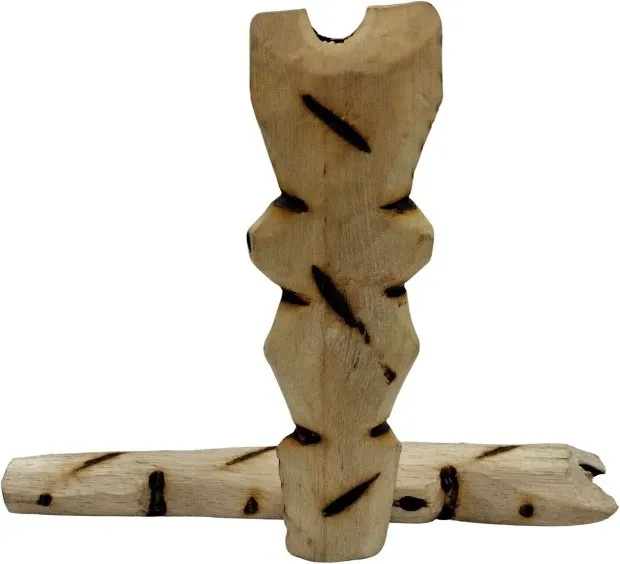
What surprised me most, though, was the instrumentation. It is a wonder that a song built on such local instruments integrates so seamlessly into a modern ear. Closer research into the Nsukka musical system shows why: each instrument is tuned to the speech sounds of the local dialect, mimicking its phonetic patterns and pitch. The Oja carries this furthest. To an outside listener its opening notes might read as simple ornamentation, but to an indigenous ear the flute is speaking, a form of speech surrogacy known in Igbo circles as Osikpolinaekwuokwu, "the dry wood that talks." In the song's early stretch, the Oja issues a summons, calling Nsukka's people to listen to what's coming; later, it shifts register entirely, turning from a serious call into a festive accompaniment that pulls listeners toward dance. The Ichaka and Ekwe mma work differently, grounding the song's tempo through onomatopoeic rhythm rather than speech mimicry, blending with Fidoko's vocals to give the track its physical, danceable pulse.
The setting does its own quiet work. The video leans on Nsukka's rolling plateaus, open grassland, and scattered palm plantations, much of it filmed within the University of Nigeria, Nsukka campus community (including the University of Nigeria Secondary School) made possible by Fidoko's own standing as a lecturer there. Shot in 2004, it carries the visual signature of early-2000s Nsukka productions, from a period when the town's natural landscape was still largely undisturbed, dancers framed against its open horizon from the plateau's highest points. The visuals track the lyrics closely: when Fidoko sings "Na m na gi kuru ji; na gu n'agu n'akpanu" ("you and I cultivated the yam together, yet you alone carried it all"), the scene cuts to two agrarian workers tilling soil in dirty black shorts, followed by one of them secretly harvesting the yield alone, glancing around for his partner before fleeing with everything.
What "Gborodigondi" ultimately preserves is Nsukka itself through dialect and through a dance tradition still visibly working through its own history.