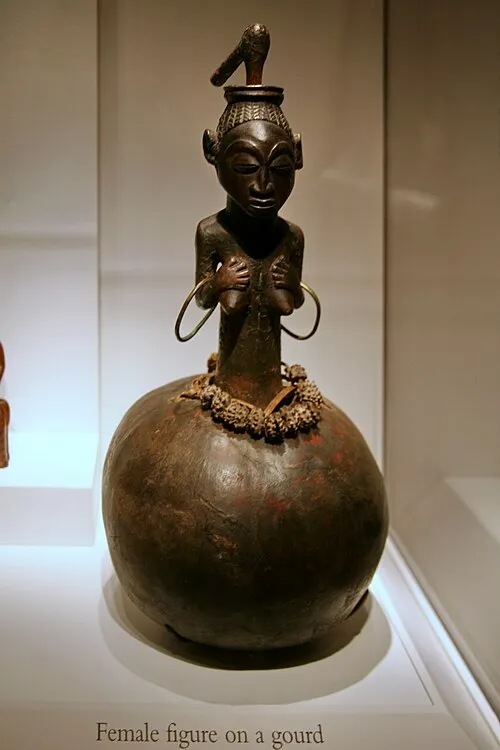
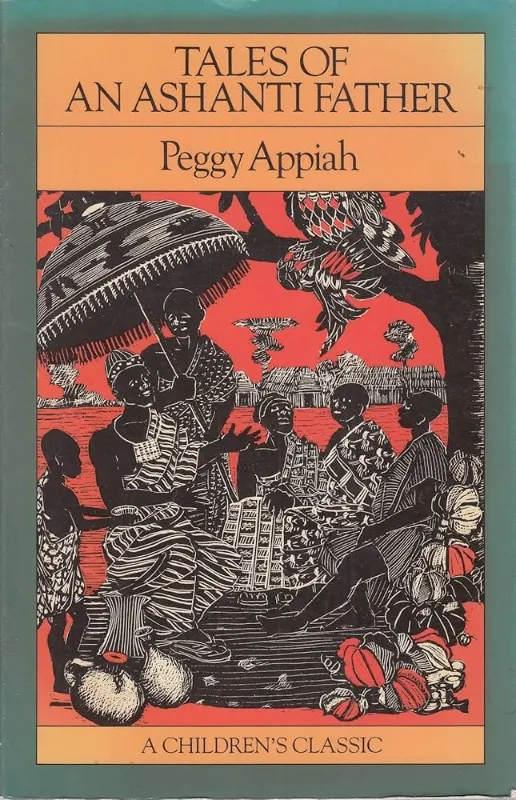
In Western historical discourse, the role of African women is often misrepresented or underplayed. Pre-colonial African societies are routinely portrayed as overwhelmingly patriarchal, with women relegated to domestic roles. However, in many African cultures—particularly among the Akan of present-day Ghana and Côte d’Ivoire—women held substantial power, not only within the home but also across governance, commerce, religion, and warfare. The Akan social order was distinctly matrilineal, and women's roles were fundamental in shaping the political, economic, and spiritual lifeblood of the society.
To understand the power of women in Akan society, one must first understand its matrilineal structure. In this system, lineage, inheritance, succession, and identity are passed through the mother’s bloodline. Children belonged to their mother’s clan (abusua), and it was the maternal uncle (wɔfa) who had authority over his sister’s children.
This structure placed women at the center of social continuity. As bearers of lineage, they were not only biological mothers but also the channels through which the society's history, values, and heritage were transmitted. Importantly, this meant that political power, chiefly succession, and land rights were often determined through the female line.
One of the most remarkable aspects of Akan political organization is the institutionalized role of the ohemaa—the queen mother. The ohemaa was not simply the king’s mother or a ceremonial figurehead. She was a co-ruler with political authority and was crucial to the selection and deposition of the king (ohene).
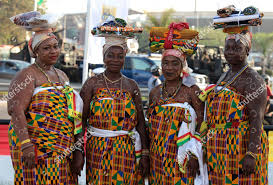
Among the Ashanti—a prominent Akan subgroup—the Asantehemaa, or Queen Mother of the Asante Kingdom, was a powerful stateswoman. The most renowned of these figures was Nana Yaa Asantewaa, who served as Queen Mother of Ejisu in the Ashanti Empire during the late 19th century. In 1900, when the British attempted to seize the sacred Golden Stool (the symbol of Ashanti sovereignty), it was Yaa Asantewaa who rallied the Asante people and led the last major war against British colonialism—the Yaa Asantewaa War.
.png)
As she famously declared: “If you, the men of Ashanti, will not go forward, then we will. I shall call upon my fellow women. We will fight the white men. We will fight till the last of us falls on the battlefield.”
This quote encapsulates not only her courage but the broader leadership roles women played during crises. As queen mothers, they were guardians of tradition, morality, and justice.
The Akan economy was heavily dependent on women. While men engaged in farming and some long-distance trade, women dominated local and regional markets. They controlled the trade in essential goods—salt, fish, cloth, pottery, and especially foodstuffs like maize, yams, and plantains.
In towns and cities, female traders organized themselves into associations, headed by market queens (ɛna) or Abɔntendoma. These women set prices, mediated disputes, and ensured quality control. Their economic clout gave them influence in the community, and in many cases, they funded public works, religious festivals, and political movements.
Historian Gracia Clark, in her ethnographic study of Kumasi market women, noted: “The market queen is not only a trader; she is a financier, a conflict manager, and a cultural custodian.”
Their roles defied colonial assumptions that African women were subservient or economically inactive. In fact, market queens wielded more influence in some towns than local chiefs.
Beyond the state and the market, women ruled over the domestic sphere as matriarchs. In the Akan home, the ɛna panin (senior mother or elder woman) had authority over household management, child-rearing, moral instruction, and the transmission of oral histories.
In extended family compounds, decisions on marriages, funerals, naming ceremonies, and rites of passage required the input of these matriarchs. They also resolved interpersonal conflicts and maintained spiritual balance within the clan.
Importantly, their role was not private but communally recognized. In disputes involving land, property, or inheritance, female elders could be called to testify and make decisions. Their knowledge of kinship lines and ancestral taboos gave them crucial legal and spiritual standing.
Women also served as akomfo (priestesses), odunsifo (diviners), herbalists, and spiritual mediums. These roles were not marginal but central to the religious life of the Akan people. In traditional Akan cosmology, the world is animated by spirits (abosom) and ancestral forces (nananom nsamanfo), which influence health, fertility, agriculture, and success.
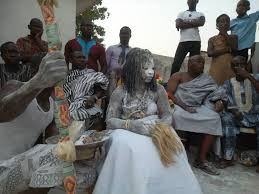
Many of these spirits were feminine in character and preferred female mediums. For instance, river goddesses like Asuo Yaa or Tano often chose women as their vessels. These priestesses performed elaborate rituals, healed ailments, interpreted dreams, and enforced moral order.
Their shrines were centers of community life, drawing pilgrims and patrons from across regions. Through trance and possession, these women channeled divine messages and wielded a form of power that even chiefs deferred to.
While warfare was traditionally dominated by men, women were not absent from the battlefield. The most famous example remains Yaa Asantewaa, whose resistance in 1900 mobilized thousands of men and women to defend Ashanti sovereignty.
However, there were also lesser-known cases of female fighters. Oral traditions recount women donning male attire to disguise themselves in war, or forming support units to gather intelligence, transport supplies, and tend to the wounded.
These stories challenge the gender stereotypes that frame African women as merely passive victims in times of conflict. Instead, they show their capacity for organizing resistance and asserting political agency.
In Akan culture, symbolism was vital in upholding the sanctity of women’s roles. The womb was not only a biological space but a sacred vessel of ancestral reincarnation. Proverbs such as: “Abusua yɛ mogya” – “The clan is blood.”
This affirmed that women were the source of life and continuity. At birth, ceremonies involved both paternal and maternal relatives, but matrilineal elders conducted the abadinto (outdooring) rituals, giving the child a name and spiritual identity.
During puberty rites, young girls underwent rituals like bragoro, where they were taught about womanhood, virtue, fertility, and sexuality. These rites were not about subjugation but empowerment—initiating them into the sacred duties of motherhood, leadership, and spiritual mediation.
Colonial rule and Christian missions radically altered these dynamics. European administrators and missionaries often refused to recognize female leaders, dismantled female chieftaincy structures, and promoted patriarchal norms alien to Akan traditions. They misunderstood the role of queen mothers, seeing them as relics rather than co-sovereigns.
In economic terms, colonial policies favored male cash-crop farmers, sidelining market women. Mission education privileged boys, while girls were prepared for domesticity. The cumulative effect was the marginalization of female institutions that had sustained Akan society for centuries.
Despite these disruptions, the legacy of powerful women endures. The Asantehemaa remains an integral part of the Ashanti monarchy. Market queens continue to shape urban economies across Ghana. Female politicians, activists, and entrepreneurs often invoke the spirit of Yaa Asantewaa and other foremothers.
In 2017, the passing of Nana Afia Kobi Serwaa Ampem II, the 13th Asantehemaa, was marked by national mourning and tribute to her leadership. Her successor, Nana Konadu Yiadom III, was enstooled with reverence, continuing the matrilineal tradition.
.png)
Moreover, feminist movements in Ghana and the diaspora are reclaiming these histories to challenge contemporary gender inequalities.
In pre-colonial Akan society, women were far from passive or peripheral. As queen mothers, warriors, traders, matriarchs, healers, and spiritual guides, they held complex and authoritative roles that sustained the fabric of society. Their influence spanned governance, economy, culture, and religion. The matrilineal system granted them a central place in both symbolic and practical terms.
These roles challenge Western assumptions about African gender relations and show a far more inclusive, historically grounded understanding of power. The legacy of women like Yaa Asantewaa continues to inspire new generations to reimagine leadership, resist marginalization, and honor the deep wells of African tradition.