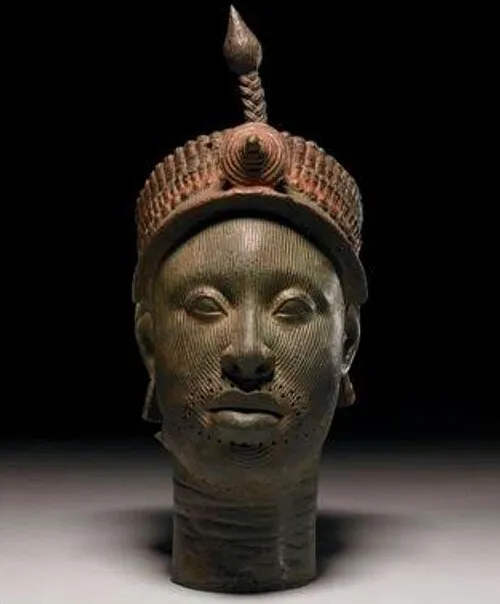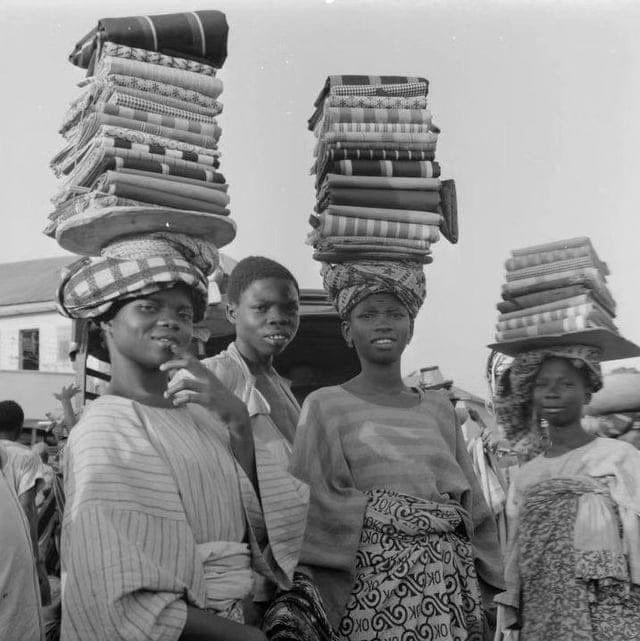
In precolonial Yorubaland, enter a marketplace and you will be assaulted, not only with the smell of different local produce, but the sounds of blacksmiths hammering rhythmically in the distance, voices negotiating over kola nuts with the intensity of modern stock traders. And in this setting, women aren't hovering at the edges—they're running the entire show. Not lurking in the shadows of male authority, mind you, but operating their own parallel government complete with titles, courts, and the power to make kings sweat over tax revenue.
You see, while Western narratives spent centuries insisting that women belonged exclusively in kitchens, Yoruba society had already figured out something rather sensible: if women controlled the markets, and markets generated the kingdom's wealth, then perhaps women deserved a seat at the decision-making table.
As a result, the Yoruba had developed a sophisticated dual-sex political system where women wielded genuine power through titles like Iyaloja (Mother of the Market) and Iyalode (King of the Women). They weren't ceremonial positions handed out to keep women quiet, no, they were acknowledgments of economic reality: women controlled the markets, and markets controlled the money.
The Scale of Power
Before diving into the women who made this system hum, we need to understand the political machinery they operated within. The Yoruba, particularly in the Oyo Empire, had constructed what can only be described as a constitutional monarchy with trust issues, where everyone watched everyone else, which sounds exhausting but proved quite effective.
Their political system operated like a well-designed constitutional democracy, minus the democracy part.
At the top sat the Oba, king, spiritual leader, and the person everyone blamed when things went wrong. But absolute power? Not quite. The Oba is surrounded by enough checks and balances to make a ledger proud.
The Oyomesi council of chiefs, led by the Bashorun, could literally send the king an empty calabash—the traditional equivalent of a resignation letter with extreme prejudice. If the Oba ignored this polite suggestion to commit suicide, the Ogboni secret society of elders would step in to mediate, presumably with less terminal solutions.
This layered approach to governance created space for parallel authority structures. Justice flowed from family heads through compound leaders to quarter chiefs and eventually to the palace, like a bureaucratic river system. In this context, powerful female chiefs weren't only revolutionary but also very logical. The system already distributed power across multiple institutions, so adding women's voices wasn't radical reform but a practical necessity.
The economic foundation supporting this political architecture was agriculture, supplemented by hunting, fishing, and specialized crafts. Yoruba farmers produced enough surplus to support large settlements, creating the wealth needed for complex political systems. Long-distance trade networks connected these communities, turning local surpluses into regional prosperity.
Markets became the nerve centers of this economic system, and they were strategically located near rulers' palaces. This is a strategy that went beyond coincidence, as the proximity to power showed the close relationship between commerce and governance. Markets generated the taxes and tolls that kept kingdoms afloat, making market leadership a position of genuine political importance.
The Female Commercial Republic
While men gathered in palaces to discuss matters of state, women built their own power base in the markets. In polygamous households, women often supported themselves and their children independently, creating a class of economically autonomous female entrepreneurs.
The market wasn't just where women worked—it was their domain. They controlled commercial activities, set prices through associations, and negotiated with authorities for better facilities. This created what scholars call a "dual-sex political system," where each gender managed its own affairs while participating in broader governance.
Women's market associations functioned as effective lobbying groups, proving that political organization around economic interests predates modern democracy by centuries. The Iyalode and Iyaloja emerged as formal representatives of this existing female power structure, not as exceptions to patriarchal rule but as acknowledgments of economic reality.
The Iyalode
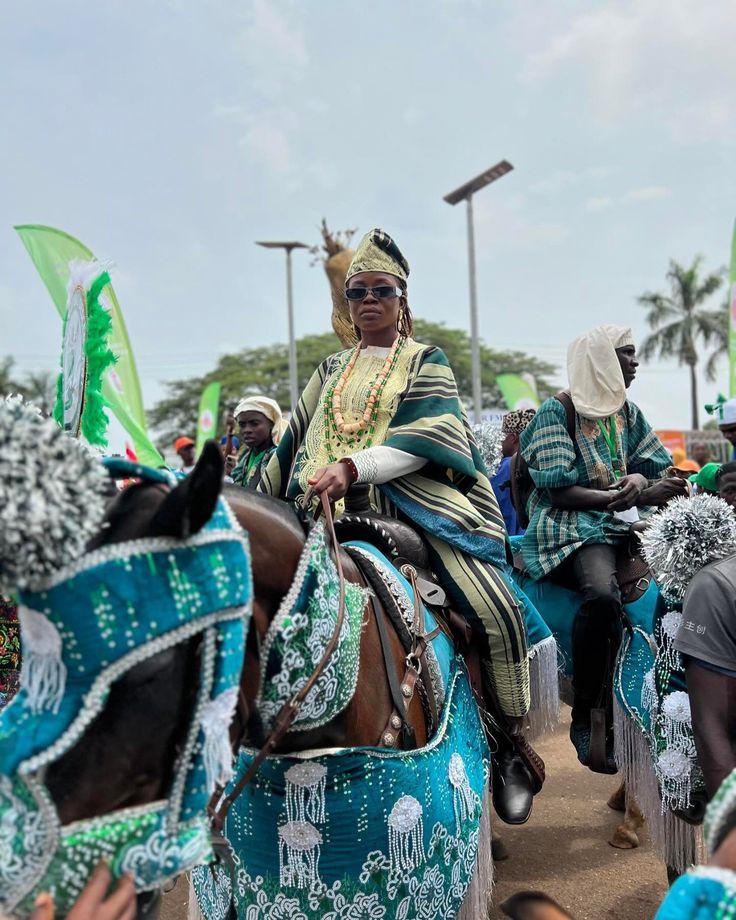
The title Iyalode, literally meaning "King of the Women," represented one of the highest positions available to women in traditional Yoruba society. Unlike hereditary chieftaincies that passed from father to son like family heirlooms, the Iyalode was elected based on merit and popular approval. Apparently, the Yoruba understood democratic principles when it came to women's leadership, even if they kept monarchy for the men.
The Iyalode served as the official spokeswoman for all women, holding both legislative and judicial authority. She sat on councils with male chiefs, exercising real power rather than providing decorative diversity. Her personal council of subordinate female chiefs handled disputes between women and maintained market order, creating a parallel administrative system that operated alongside, not underneath, male governance structures.
This separation of powers was so complete that no matter how powerful an Oba became, he could never hold the title of Iyalode. The position represented institutionalized female authority that male power couldn't absorb or override—a system of gender-based checks and balances that protected women's political space.
The Iyaoloja
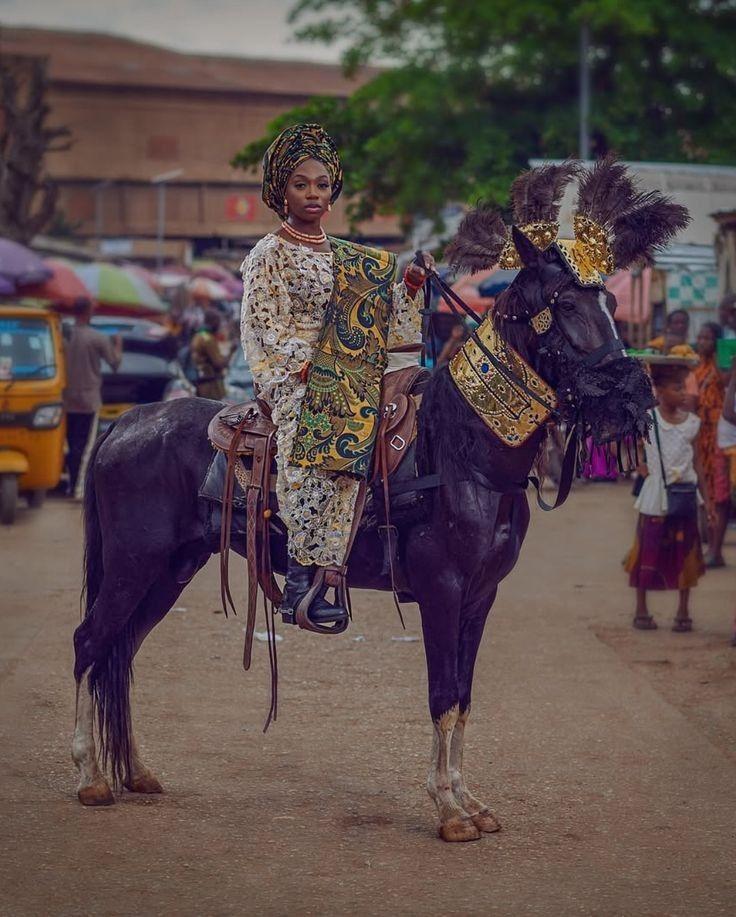
While the Iyalode represented women generally, the Iyaloja focused specifically on economic matters as the "Mother of the Market." Democratically chosen by market women and confirmed by the Oba, she administered commerce with the authority of both popular mandate and royal approval.
Her responsibilities extended far beyond simple market management. The Iyaloja collected taxes and tolls that formed the kingdom's primary revenue source, making her essentially the chief financial officer of the realm. She resolved both civil and criminal cases, maintained market laws, and could impose punishments ranging from shop closures to permanent expulsion from trading.
The market itself functioned as a complete institution—legal, administrative, and social center rolled into one. The Iyaloja's office within this space served as courthouse, government bureau, and commercial headquarters simultaneously. Her success directly affected the kingdom's prosperity, making her indispensable to royal authority rather than subordinate to it.
Even the existence of a male equivalent, the Babaloja, confirmed the Iyaloja's supremacy in commercial matters. He was functionally subordinate, like a deputy to the real authority. The hierarchy was clear: in matters of trade, women led and men followed.
HISTORY BACKED WOMEN OF COMMERCE
In most cases, attaining these titles required more than political skill—it demanded serious money. Women like Efunsetan Aniwura and Madam Tinubu converted vast fortunes into political capital, proving that in Yoruba society, economic success translated directly into social influence.
And it wasn't unusual; it was systematic. Personal wealth provided the foundation for public status, creating a meritocratic element within traditional hierarchy. Women who generated substantial income commanded respect and gained access to political circles that might otherwise exclude them. The system rewarded economic competence with political opportunity, regardless of gender.
Efunsetan Aniwura
Efunsetan Aniwura, the second Iyalode of Ibadan, built one of the largest fortunes in 19th-century Yorubaland through long-distance trade in agricultural products, tobacco, and slaves. Her business acumen was matched by political shrewdness—she strengthened Ibadan's military by ensuring steady supplies of European weapons and extending credit to war chiefs for arms purchases.
Her financial contributions made military campaigns dependent on her support, giving her influence over decisions of war and peace. During the Ijaiye war, her backing proved crucial to Ibadan's success. She had essentially become too big to fail, a position that should have guaranteed political security.
Instead, her story became a cautionary tale about the limits of female power within traditional structures. Aare Latoosa, Ibadan's de facto ruler, grew jealous of her wealth and independence. When she refused to support his expansionist policies, he plotted against her. Despite her contributions and public recognition, her power remained conditional on male tolerance.
The politics of gender ultimately destroyed what economic success had built. Latoosa perceived her influence as threatening to established order and moved against her. Her deposition and eventual murder demonstrated that even institutionalized female authority could be overcome by determined patriarchal resistance.
Madam Tinubu
Efunroye Tinubu took a different approach to political survival. Through strategic marriage to Oba Adele, she gained access to royal connections that she leveraged into a trade empire encompassing slaves, salt, and tobacco. Her real political genius lay in becoming a "kingmaker"—using her wealth to influence the installation and removal of multiple Obas.
Her financial backing allowed exiled rulers to return to power, creating a network of grateful monarchs indebted to her support. This patron-client relationship gave her influence over royal succession that exceeded the power of many traditional chiefs.
Tinubu's authority extended beyond domestic politics into international affairs. She used her economic monopolies on palm oil and firearms to resist British colonial interests, directly challenging Consul Benjamin Campbell's authority. This defiance established her as both political leader and nationalist symbol.
When the British forced her exile from Lagos in 1856, she simply relocated to Abeokuta and continued her political activities. There, she supplied arms during a war with Dahomey, earning the title of Iyalode of all Egbaland. Unlike Efunsetan, she understood that to survive, one needed flexibility and strategic retreat when necessary.
Marketplace Politics in Modern Times

Colonial administration and Western governance models undermined traditional female leadership roles, creating what scholars describe as "cultural extinction caused by modernity." The dual-sex political system gave way to European-style patriarchal structures that marginalized women's institutional authority.
Contemporary Nigeria reflects this disruption, as women face systematic discrimination through cultural biases and institutional barriers, which, in turn, limit access to financial resources and leadership positions. While Iyalode and Iyaloja titles still exist, they carry less authority than their pre-colonial predecessors.
Modern-day titleholders still oversee market affairs and represent traders in traditional councils, but their roles have evolved to include new political functions. Today's Iyalojas mobilize women for government initiatives, influence infrastructure projects, and secure micro-credit facilities from state authorities. They've adapted to democratic politics while maintaining commercial leadership.
However, this evolution has changed how these positions are filled. Historical appointments based on accomplishment and popular approval have given way to more institutionalized processes controlled by traditional rulers. Recent controversies around appointments in Ibadan and Lagos highlight this shift toward political and family influence rather than meritocratic selection.
The power to appoint or remove an Iyaloja now often resides solely with the Oba, and deceased titleholders can even name their successors. This represents a significant departure from traditional democratic selection, making positions easily manipulable.
Indigenous Feminism and Historical Lessons
The historical roles of Iyalode and Iyaloja represent a form of indigenous feminism that predates Western gender equality movements. These women didn't seek to imitate male power structures but created their own spheres of authority within a complementary system. They proved that leadership wasn't exclusively masculine while demonstrating that economic independence provided a direct path to political influence.
Their stories offer blueprints for women's leadership that emerge from African cultural contexts rather than imported ideologies. The dual-sex political system showed how societies could organize around gender complementarity rather than hierarchy, creating space for female authority without requiring the elimination of male power.
These historical examples also reveal the vulnerability of women's institutional authority when it conflicts with patriarchal interests. Both Efunsetan's destruction and Tinubu's exile show us that even formalized female power remained subject to male tolerance when push came to shove.
Conclusion
The history of Yoruba market women illuminates how economic control translated into political authority in pre-colonial Africa. The Iyalode and Iyaloja weren't tokens or exceptions but institutional responses to women's central role in commercial life.
The markets these women controlled weren't just commercial spaces but centers of political, legal, and administrative authority. Their leadership reflected economic reality—women ran the commerce that funded the kingdoms, making their political participation necessary rather than generous.
And while contemporary challenges have reduced their authority, the legacy of these market queens persists. They demonstrated that women could wield substantial power when they controlled essential economic functions, providing historical precedent for modern female leadership in Africa.
Their unseen crowns may have lost some luster in the colonial and post-colonial periods, but the foundations they built remain. In markets across Yorubaland, women still trade, negotiate, and lead, carrying forward traditions of female economic authority that stretch back through centuries of commercial success and political influence. The matriarchs of the marketplace created institutions that outlasted individual rulers, proving that economic power, carefully wielded, is the biggest weapon of all.