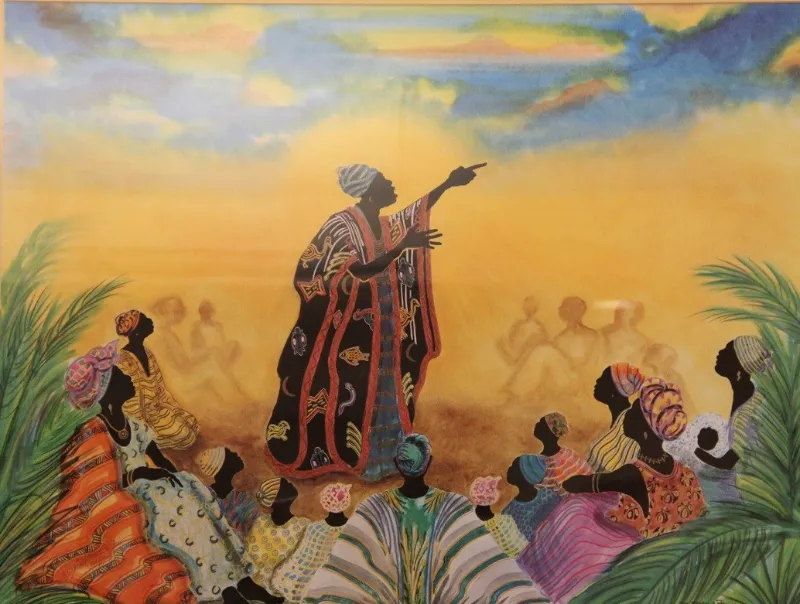
When history tells tales of warriors and battlefield bravery, the stories are often dominated by men. Yet, in the heart of West Africa - in the ancient kingdom of Dahomey, now the Republic of Benin - history carved a different path. There, an elite military unit known as the Dahomey Amazons, or as the Agojie in their native Fon language - and affectionately called Mino, meaning 'our mothers', defied gender norms and stood as one of the most powerful all-female armies the world has ever seen in West African history.
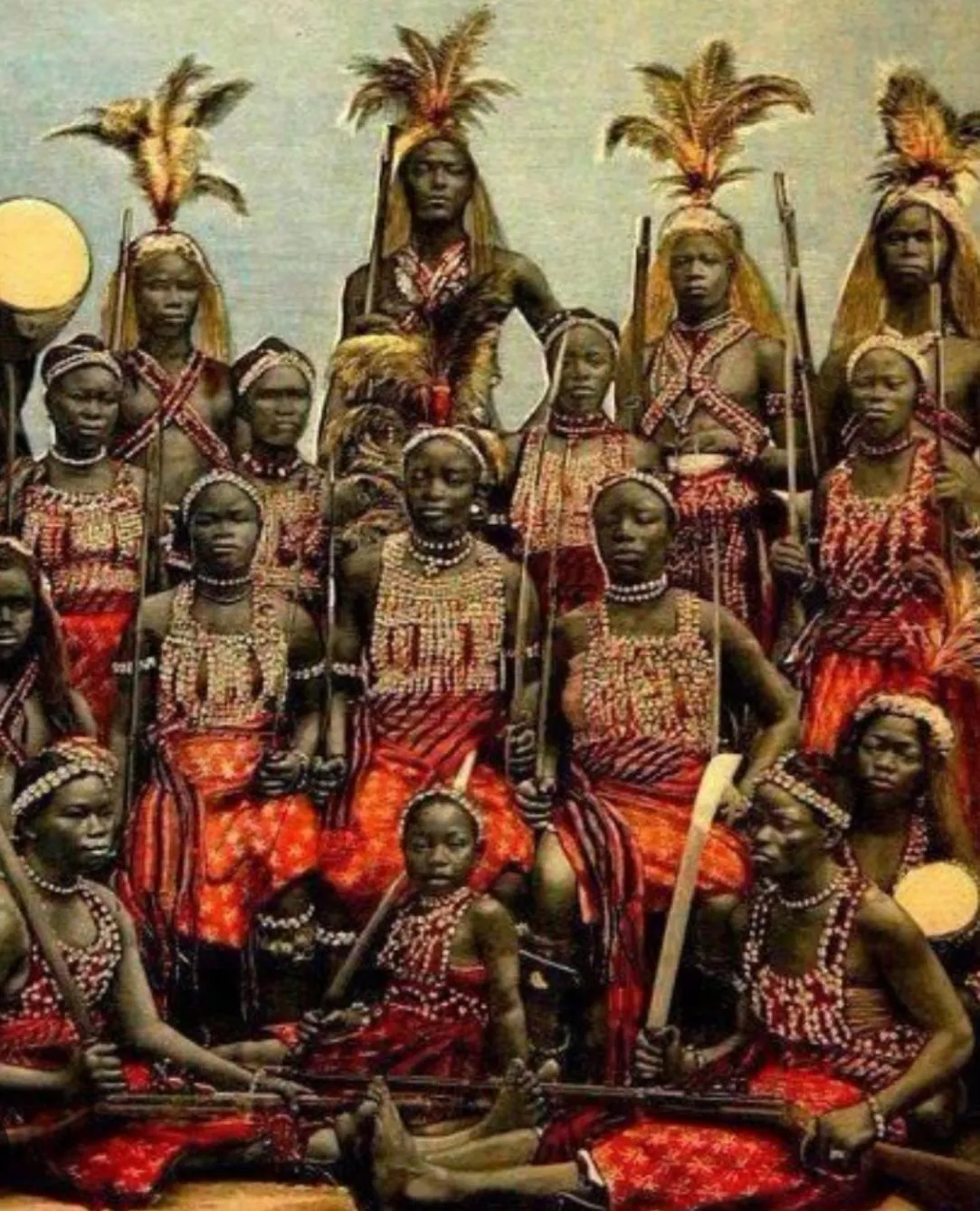
Origins: From Royal Guards To Fearsome Warriors
The origin of Dahomey Amazons dates back to the 17th century. Oral tradition suggests that they began as royal elephant hunters or palace guards for King Houegbadja (1645–1685). But it was under King Ghezo who ruled from 1818–1858 that they were fully transformed into a formal military corps.
Faced with growing military threats and internal challenges, King Ghezo recognized the value of training and deploying women as professional soldiers. In this, the Amazons became essential. These were not ceremonial figures - they were warriors, commanders, and executioners trained to defend and expand the kingdom.
Recruited from among young girls - some were volunteers, others were captives or chosen by force - they underwent intense training in warfare, survival, and discipline. Once enlisted, they took an oath of celibacy, lived in military compounds within the palace, and dedicated their lives entirely to the state. Their loyalty belonged to the king alone.
Training, Structure, And Specialization
Life as a Dahomey Amazon was anything but ordinary. From the moment they were recruited, the women underwent intense physical and psychological training. They were taught hand-to-hand combat, swordsmanship, rifle handling, and tactical maneuvers. Their daily routines included:
- Morning drills and target practice
- Weapons polishing and combat simulations
- Martial arts and self-discipline rituals
- Ceremonial dances that doubled as military drills
The army was divided into several specialized units, each with its own uniform, hierarchy, and role:
- Riflewomen (armed with muskets or European rifles)
- Archers
- Reapers (wielding machetes and swords)
- Elephant huntresses (the original corps with deep symbolic importance)
- Commanders (strategic leaders who reported directly to the king)
They were not wives or mothers, but warriors of the king. Any form of romantic involvement was forbidden, and they were revered (and feared) by the citizens of Dahomey.
Cultural Significance And Gender Roles
What made the Dahomey Amazons truly revolutionary was how they shattered traditional gender roles. In many parts of the world at the time, women were excluded from warfare. But in Dahomey, being female was not a barrier - it was a weapon.
These warrior women were respected not just for their strength but for their spiritual significance. Many were believed to possess protective powers and divine favor. Their presence in the army reinforced female authority and autonomy, even within a patriarchal royal system.
Battle Bravery, Fearless Combat And Defeat
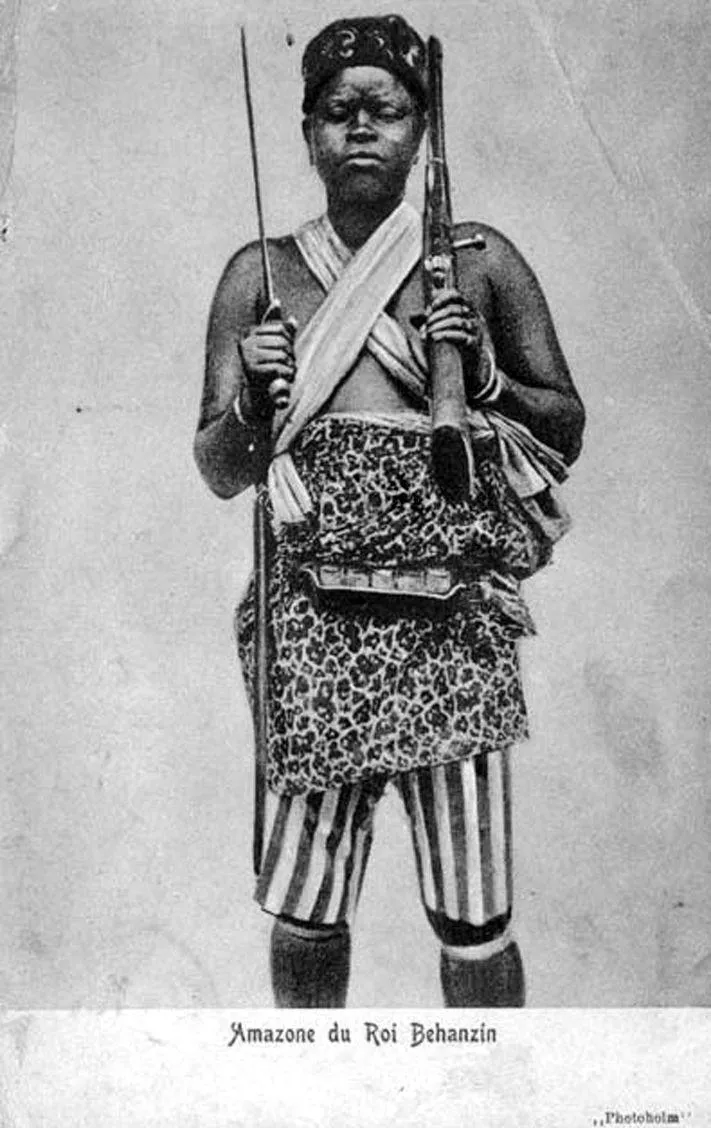
The reputation of the Dahomey Amazons rested on their battlefield success. They fought against neighboring kingdoms and, later, against European colonial invaders - under the rule of King Béhanzi -King Gehzo’s descendant, who led Dahomey in the First and Second Franco-Dahomean Wars against the French colonizers.
Notable battles include:
- Wars against the Oyo empire and the Mahi people: The Amazons were frontline attackers, known for their fearless charges and tactical discipline.
- Raids for territorial expansion and slave capture (as was common in many kingdoms of the time)
- Major confrontations with the French army during the First and Second Franco-Dahomean Wars (1890 and 1892–1894)
The Amazons’ decline began with the French colonization of Dahomey. When tensions rose between Dahomey and the French over control of key territories like Coronou and Porto-Novo. The Dahomey Amazons fiercely attacked French positions, including a daring assault on Cotonou, where they shocked French forces with their bravery. Another major battle occurred at Atchoukpa, where the Amazons again showed immense strength, though they eventually suffered heavy losses. Despite their efforts, the war ended in a treaty, with Dahomey agreeing to recognize French control over certain areas, though they retained some independence.
During these conflicts, European soldiers were stunned by the ferocity and discipline of the Amazons. A French colonel who witnessed their strength firsthand in the 19th century reported “They are stronger than men…they fear nothing.” French military reports described them as “the most feared warriors in all of West Africa.” Armed with spears, muskets, and unmatched courage, they launched direct assaults, ambushed enemies in forests, and often fought to the death.
One French officer remarked:
“These women… fight with incredible bravery. Even when wounded, they refuse to retreat.” After the First Franco-Dahomean War in 1890, their final major stand came during the Second French conquest of Dahomey in 1892 - 1894. Tensions reignited when King Béhanzin refused to accept full French domination. This time, the French returned with a larger, better-equipped army and new tactics. Outnumbered and outgunned by modern artillery and machine guns, the Amazons stood boldly, and continued to fight bravely against heavily armed French troops, fought heroically, especially during the battle of Cana, but were eventually defeated. Many were captured or killed, while others faded into anonymity and by 1894 King Béhanzin was captured and exiled. But their legacy endured, their defiance left a lasting impression on European forces.
The defeat of Dahomey in 1894 by French colonial forces marked the end of the Amazon corps. Colonial authorities disbanded them, banned their training, and discouraged any symbols of their past power. Many former Amazons were forced into civilian life, though some remained legends in their communities, and Dahomey was officially colonized by France.
Legacy, Modern Recognition And Representation
Over time, their legacy has re-emerged - not just in Benin but globally. Their courage, independence, and sacrifice have become a point of pride for African feminists, historians, and artists seeking to reclaim erased narratives of African female leadership.
The Dahomey Amazons inspired generations of African women, and their story remains a symbol of strength, defiance, and resilience. And this story continues to inspire modern storytelling:
- In 2022, the Hollywood film “The Woman King” brought their story to the global stage, drawing attention to their real-life history.
- In Benin, monuments and oral histories continue to celebrate their contributions
- Across Africa, the Amazons are remembered as symbols of resistance, discipline, and unshakable courage.
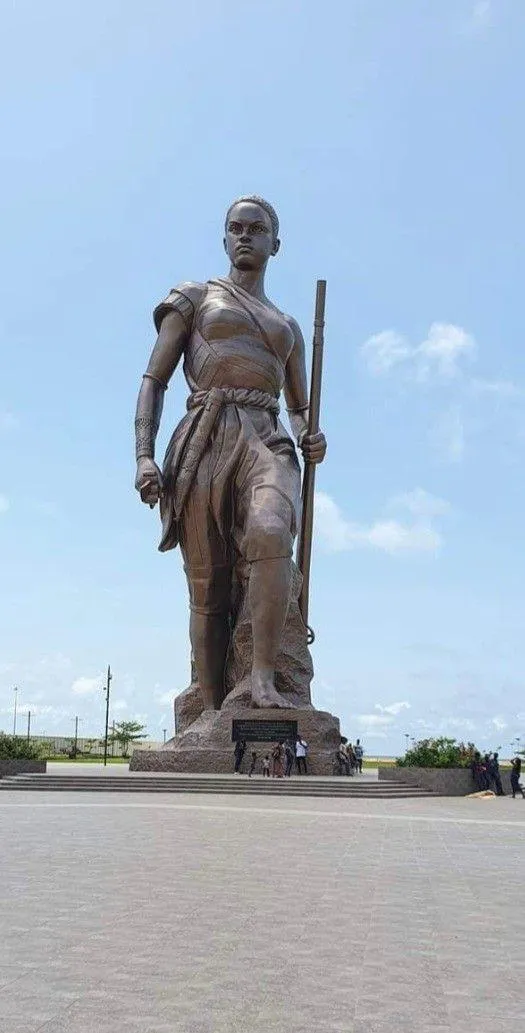
More importantly, they challenge long-held colonial ideas that African women were passive or confined to the domestic sphere. The Mino stood shoulder-to-shoulder with men in one of Africa’s fiercest military traditions and rewrote the script of gender and power.
The Dahomey Amazons were more than a military unit. They were the living embodiment of loyalty, strategy, and female strength in a world that often refused to see women as warriors. Their legacy is not just in battle stories or royal records - it's in the inspiration they continue to provide for women everywhere who seek to challenge limitations and claim their space in history.
To remember them is to honor a powerful truth: African women have always been leaders - not just in silence, but with swords in their hands and fire in their hearts.