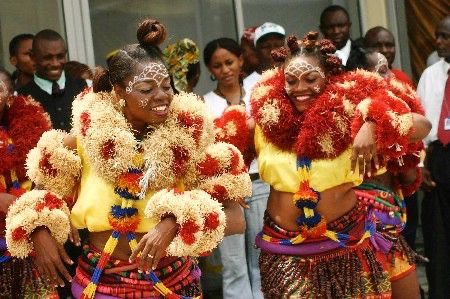
The Sùkú is a hairstyle originating with the Yoruba ethnic group of West Africa. It is a sophisticated form of hair art that goes beyond mere aesthetic decoration. Sùkú (also rendered Shuku) derives from the Yoruba word meaning "basket," describing the style's singular form: hair is meticulously woven in tight strands (irun didi) from the head's perimeter inward, moving upward toward the crown where the braids converge and culminate in an elevated, conical protrusion resembling an inverted basket. In Yoruba thought, the physical head (or Orí) is the primary site for communicating an individual's identity, age, political standing, and spiritual condition. The way hair is treated is thus conceptualised as a deliberate art form, Ìrún Yíyà, which serves to distinguish status and gender. Certain styles, such as Kojusoko, are specifically designated for women and are culturally "forbidden" for men.
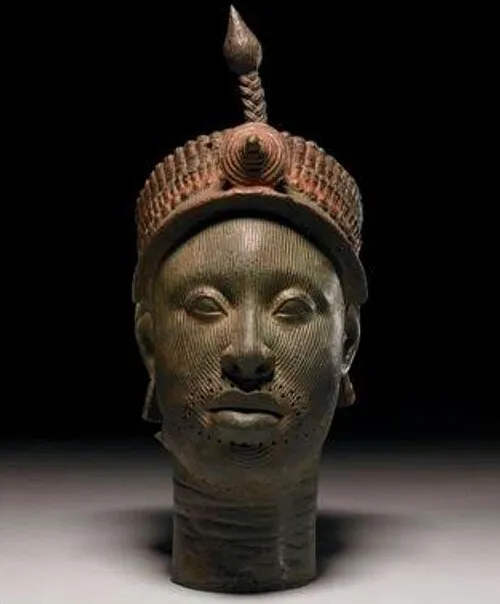
The Sùkú braiding method is anchored in West African antiquity, with archaeological evidence tracing the tradition back approximately 2,500 years. This persistence is rooted in the artistic traditions of early civilisations within the region. The Nok culture, which flourished in Central Nigeria from approximately 1000 B.C. to 500 A.D., is recognised as the earliest sub-Saharan producer of life-sized terracotta sculptures. These sculptures frequently depict elaborate hairstyles, including conical or crown-like structures. The Nok society is historically believed to have evolved into the later Yoruba Kingdom of Ife, which became the cultural and spiritual center of the Yoruba people. Art historical analysis confirms a continuity in stylistic details, such as complex coiffures and facial stylization, between the Nok tradition and the later Ife art forms. The durability of the elevated, centralised hair aesthetic demonstrates that the Sùkú's defining conical shape is an ancient aesthetic principle utilised to signal high status and religious importance, paralleling the symbolic elevation of the king's beaded crown.
Historically, the Sùkú hairstyle was a rigid index of social hierarchy. It was traditionally reserved exclusively for the Yoruba nobility, most notably for queens, olori, and the wives of royalty. When associated with this aristocratic context, the style was specifically referenced as Suku Elewo. The royal connection was symbolised by incorporating expensive and ritually significant adornments. The coiffure was traditionally decorated with precious royal beads, such as Iyun (red coral) and Segi (blue glass beads). These adornments are costly and are associated with the sacred qualities and divine ancestry of the lineage. By combining this complex, labour-intensive hairstyle with material wealth, the Sùkú Elewo served as a dual signifier. It functioned simultaneously as an index of political proximity to the central authority (Oba) and as a guarantee of divine protection, given that royal regalia beads often symbolise connections to specific Orisha (deities).
Yoruba ontology holds the head (Orí) as the most significant part of the human framework, regarded as the locus of àṣẹ, divine power, received directly from Olódùmarè. The Orí is thus believed to govern the individual's life-source, personality, and destiny. The conceptual importance of the head is reflected materially in Yoruba artistic conventions, where the head is disproportionately emphasised in sculpture, often comprising one-third or one- fourth of the figure's total height, mirroring the creation myth where Ọbàtálá molds the head first with meticulous attention. The objective in Yoruba spiritual practice is to achieve iwa-pele (balanced character) through alignment with one's Orí. By deliberately raising the hair at the crown, the Sùkú visually reinforces the head's role as the highest point of the physical body, connecting the individual to the celestial realm (Orun) and underlining the concentration of àṣẹ. Since the Orí must be constantly appeased and consulted to ensure that events unfold favorably, treating the physical head with elaborate and culturally significant artistry, such as the Sùkú, constitutes an act of veneration (iborí).
A noteworthy application of this practice is the adoption of Sùkú by male religious specialists, specifically Sàngó priests. These priests wear female hairstyles like Sùkú and Koroba as part of a formal "priest/wife" metaphor. This practice does not signify a change in gender identity but rather symbolically identifies the wearer as a devoted confidant who caters to the Orisha. In this context, the Sùkú becomes a visual marker of devoted servitude and proximity to spiritual power, reinforcing its meaning as a sign of high ritual status, irrespective of the wearer's secular or noble lineage.
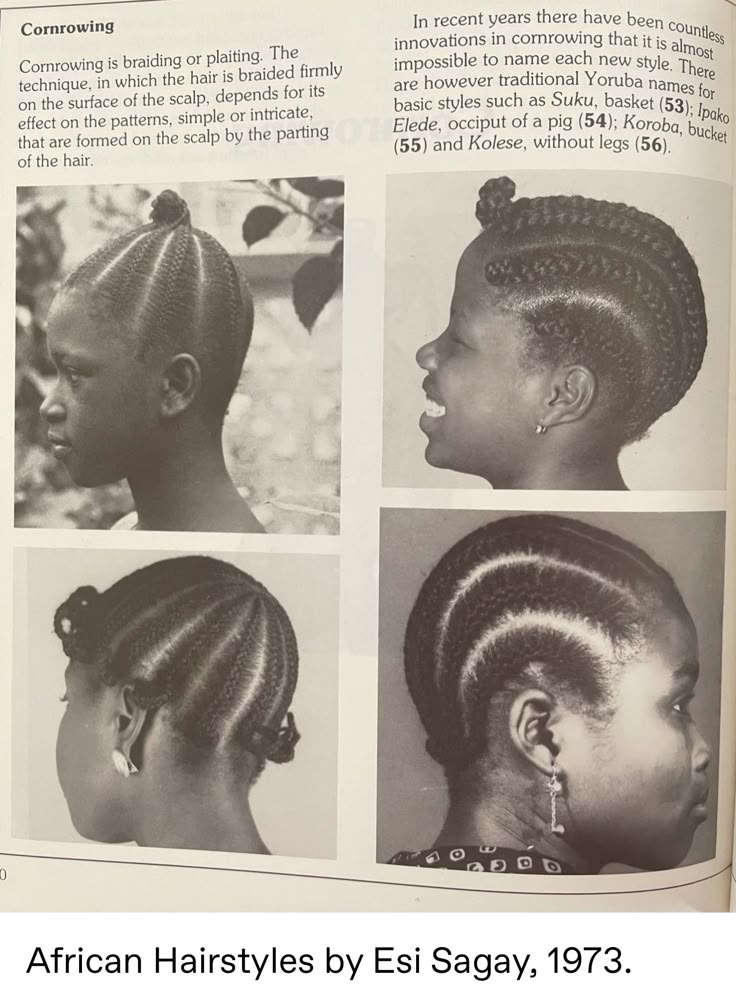
Yoruba traditional hairstyling maintains a distinction between irun didi (weaving) and irun biba (plaiting or loose braiding). Weaving is considered the "vintage way" for women to adorn their hair, requiring significant time, resources, and technical skill, thereby carrying a higher cultural value than simpler plaiting techniques. The cultural disapproval of shaving the head (considered alailafinju or unfashionable) ensures the continued demand for these complex weaving styles. The execution of Sùkú specifically utilizes irun didi, often described as "inverse braiding" or side didi. This technique involves tightly braiding the hair to the scalp, which provides the necessary tension and structural integrity to elevate the strands and form the characteristic centralized hump. Other major weaving styles include Koroba (the inverted basket, where braids flow down) and Kolese (woven backward from the forehead).
The hair artist, known as the Onídìrí, is a specialized artisan whose creation process is equated with sculpting (Yíya àwòrán). The mastery of the Onídìrí relies on Ojú ọnà (visual cognition), a skill that enables the artist to select, process, and retrieve traditional images and patterns from cultural memory, allowing them to create complex, canonical patterns without needing life models or preparatory sketches. The artistry is achieved using simple, traditional implements. The essential tool for the preparatory process is the Ilarun, a hair cutter comb with three teeth, which is used for the precise separation and definition of the sections (Lílà) that initiate the weaving process. The practice of didi is noted as taking considerably more time than simpler methods. Because time is intrinsically linked to status, the labour-intensive nature of Sùkú reinforced its initial exclusivity. The completed hairstyle provided a visible, public record of the wearer's access to both high-skill labor and significant leisure time, reaffirming its origins in the aristocratic class.
Over recent generations, the Sùkú hairstyle has undergone a process of cultural democratisation. The style has transitioned from being an exclusive marker for royal wives to being "commonly worn by women of all ages and status". While losing its formal exclusivity, the Sùkú retains its cultural gravity, remaining relevant for significant life passages and community events, including "naming, cult festivities, pageantry, and celebrations." The material execution of the style has been influenced by modernisation and globalisation, particularly since the early twentieth century. The indigenous techniques now exist alongside the use of Western hairdressing tools and materials. Contemporary iterations of Sùkú frequently incorporate synthetic extensions or fibers, such as Brazilian wool, Kanekalon braiding hair and may integrate modern elements like detachable ponytails and buns. Despite the shift in materials and the incorporation of modern techniques, the Sùkú displays structural fidelity. Contemporary stylists maintain the core geometric principle: the centralised, upward-swept crown structure that defines the style. The adaptation of the Sùkú from an exclusive royal signifier to a democratised cultural style exemplifies the vitality of indigenous artistic labour (didi) and the resilience of spiritual belief. Though materials and social access have evolved, the core imperative remains constant: to utilise complex artistry to honour and elevate the Orí.