Introduction
The belief in reincarnation is very popular among many tribes in African society. The Esan people of Edo state, Nigeria, are not left out in such a
belief. Like most African tribes, they believe the soul is indestructible, and although the body dies, the soul transcends to the spirit world. According to the Esan belief, the death of a man is not his end, but it is the beginning of another journey for him. The Esan people are deeply religious, and although they believe in a supreme God called Osenobua, there are other agents of Osenobua who he has put in place to listen to the requests of men. These agents are made up of deities, ancestors, deceased heroes, and certain spirits.
Depending on a person’s actions when he was alive and his Ehi, a human after death can be deified or become an ancestor. To understand the Esan belief of reincarnation (Iroso/Orọ), other important subjects such as the nature of their spirituality and beliefs have to be considered.
The Esan People and Their Spirituality
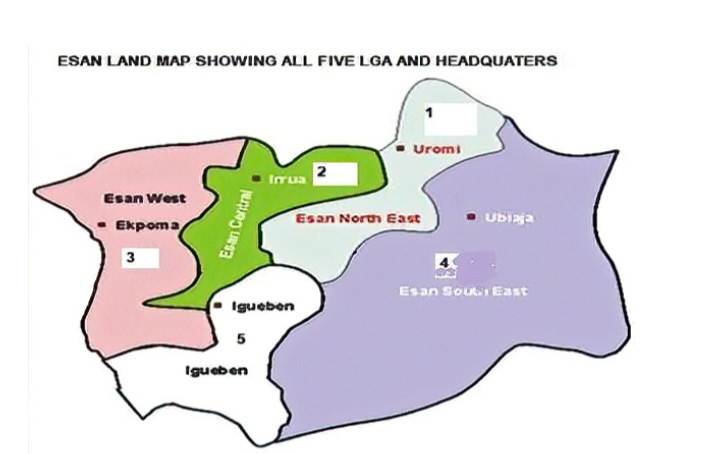
The Esan people live in the South-southern region of Nigeria. They are one of the largest ethnic groups that make up Edo state, Nigeria. The whole of Esan land is made up of 35 kingdoms, with each being governed by its own Onojie (king). The Esans have their own religion, beliefs, traditions, and deities, although they share similarities with the Edo religion due to their migration from Benin during the 15th century.
As already stated, they believe in one supreme God (Osenobua), who is the owner of the earth. There are deities, though, who serve as mediators between them and Osenobua, and these deities help them to pass on their requests to Osenobua. The Esans build shrines for their deities where they are worshipped and sacrificed to. During times of plagues or distress, the deities can be appeased with the appropriate sacrifice. Some of the deities the Esan people worship are: Osangue (Deity of Harvest), Obiemhen/Obiewen (Deity of birth and human fertility), Osun (Deity of medicine, herbs), Idigun (Deity of iron), Ogiwu/Ogiuu (Deity of death), and Esu (Deity of trickery).
Aside from deities, the Esans also worship heroes (humans who performed extraordinary feats, late kings, warriors, or healers). They also believe in the worship of spirits, such as those that dwell in rivers or certain trees. The most important part of Esan spirituality that also connects to reincarnation is the veneration of ancestors. Ancestral worship was so popular with the Esan people that everyone worshipped the spirit of their departed parents because they believed that, since they dwelled in the spirit world, they could see and intercede with Osenobua on their behalf. The Esans heavily believe in the worship of Arimhin/Elimhhin (Spirits). These Elimhin/Arimhin are made up of dead family members now turned ancestors, and other spirit forces. At the core of their belief is the belief in Ehi. Ehi is a person’s spiritual counterpart or extended self that resides in the spirit realm. Before a person is born, the individual appears before Osenobua to determine their life plan. The Ehi stands in as a witness and is responsible for watching the person’s adherence to their pre-chosen path. The Ehi offers guidance and protection to the individual, while giving a daily report to Osenobua on the individual’s activities. When a person dies, their Ehi does not die; instead, it reports back to Osenobua and can then begin on a journey of improvement in the spirit world. It is the belief in the continued existence of a person’s Ehi after death that provides the basis for ancestral veneration and for an individual to be reborn.
Belief in Iroso/Orọ (Reincarnation)
The Esan people strongly believe in reincarnation, which they call Iroso or Orọ. They believe that both life and death are from God, and are both necessary and inseparable. Death, they believe, is another level for a person’s spirit to transition to the next phase. They believe the deceased can reincarnate in more than one child at the same time. The aim of the soul is to become pure like the gods, but for this to happen, the soul will have to strive for continuous spiritual improvement in the form of reincarnation. The soul has a specific number of times to be reborn, and the Esan people believe it to be seven times.
One of the reasons for reincarnation among the Esan people is that they believe it is a way for the dead family members to continue their relationship with their family members who are still alive. They believe their dead loved ones return to their families in another body out of the desire to remain connected.
On the subject of who can be reincarnated, it differs among various Esan communities. Some communities believe that only ancestral spirits can be reincarnated, while others believe that any person who has died and their Ehi seeks to come back again can, as long as it is granted by Osenobua. In the Esan tradition, an ancestor is a dead individual who lived a good, long life on earth, and his/her family must have given the individual the full and proper burial rites necessary.
How Reincarnation is Recognised in the Esan Tradition
To determine if a child is a reincarnated family member and to identify which specific family member has returned, families often consult a diviner. The diviner can tell the family the information they need, and in certain situations, the child could be given the name of the person reincarnated.
Observation is another key method. By studying and observing the behaviour and appearance of the child. The child may possess similar physical features or behavioural traits to the deceased family member.
Another form of identification is by listening to the statements of the child after he/she has learned how to talk. The way the child speaks or what he/she says can help determine if the child is a reincarnated family member and which family member has been reincarnated.
Conclusion
The Esan belief in reincarnation, or Iroso/Orọ, is a reflection of their understanding of life, death, and spiritual continuity. It reflects a worldview where the boundaries between the physical and spiritual realms are thin. The ancestors continue to guide and exist among the living through new births. Iroso/Orọ is seen as a cycle that honours the bond between families.
The Esan people’s relationship with their ancestors, deities, and personal spirits, like the Ehi, portrays a rich spiritual system where every birth could be a return, and every death, a passage, and not an end.