
In Igbo thought, destiny is an inheritance agreed upon before birth, witnessed by God and ancestors, and lived in the open arena of the human world. It is neither an abstract philosophy nor a private creed. It is visible in the way people speak of their chi; their personal god, creator, or spiritual double. It is declared in the phrase akala aka m, meaning “my destiny,” and it is tested in the trials of ọgbanje, the returning spirit-child.
In Igbo cosmology, destiny is not seen as unalterable. Though it is granted by God through one’s chi, it can be changed, improved, or even destroyed by a person’s choices, lifestyle, and actions. The Igbo understanding rests on a tripartite ontological relationship between chi, akala aka, and ikenga:
- Chi is God, who is the supreme creator who also assigns each person a guiding spirit.
- Akala aka is the destiny given by chi.
- Ikenga symbolizes a person’s talent, strength, enterprise, and capacity for achievement.
In this relationship, chi bestows each person’s akala aka, but the fulfillment of that destiny depends on one’s ikenga — the will and ability to bring it into being. Three basic factors, therefore, determine the success or failure of destiny attainment: the benevolence of one’s chi, one’s personal effort (symbolized by the ikenga), and one’s conscious commitment to uphold the laws and customs of the community.
Success also requires the skill to marshal favorable forces through rituals, sacrifices, prayers, vows, offerings, medicines, and charms, to neutralize malevolent influences. Seeking the help of God, benevolent deities, ancestors, and the support of family, lineage, clan, and other social institutions is considered vital.
Chi: The Personal God
Chi is both intimate and cosmic. Assigned by Chukwu, the supreme deity, before birth, it embodies a person’s unique spiritual essence and life path. A proverb gives the balance plainly: Onye kwe, chi ya ekwe — when one agrees, their chi agrees. Here is predestination tempered by agency: the chi lays the plan, but the human’s will must work it into reality.
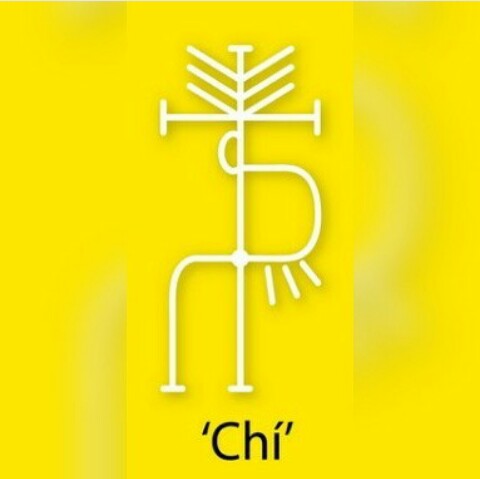
Igbo literature renders chi not as a mere metaphor but as an active presence. In Chinua Achebe’s Things Fall Apart, Okonkwo measures himself against his chi with the same severity he measures himself against his father’s failures:
"When a man says yes, his chi says yes also. Okonkwo said yes very strongly; so his chi agreed."
Yet Achebe shows that even a strong chi does not guarantee a smooth passage. Okonkwo’s exile following an accidental killing becomes a commentary on the limits of human power against the unseen terms agreed upon before birth.
In contemporary writing, Chimamanda Ngozi Adichie uses chi in Purple Hibiscus to frame a personal crisis. Aunty Ifeoma invokes it when counselling Kambili, reminding her that each person’s chi responds differently to hardship. Here, the chi is a moral and emotional compass.
In practice, the relationship to one’s chi is tended through ritual. Personal shrines, called okpesi chi, once stood in family compounds, marked by upright stones or carved wooden posts. At dawn, the head of the household offered kola nut, palm wine, or the blood of a fowl, calling the chi to strengthen his hand in the day’s work. These acts were seen as negotiations and reaffirmations of the pact made before the soul took on flesh.
Akala Aka: Destiny Itself
When an Igbo person speaks of akala aka, they are not referring to the creases on the palm but to the destiny assigned to them — akala aka m meaning “my destiny.” While palm-line reading exists as a divinatory practice, the deeper meaning of akala aka lies in its role in the triad with chi and ikenga.
Achebe alludes to this encoded fate in Arrow of God, when Ezeulu reflects on the life of his son Obika, whose volatile nature, strength, and early death seem prefigured — less the product of circumstance than of something sealed into his being.
In earlier ethnographic accounts, colonial observers sometimes misread akala aka as purely physical palm markings. In truth, the lines are a symbolic inscription of a deeper reality: destiny as given by chi and shaped by ikenga. A person’s akala aka can be redirected or even overturned by their actions, community standing, and spiritual interventions.
Ikenga: The Power to Realize Destiny
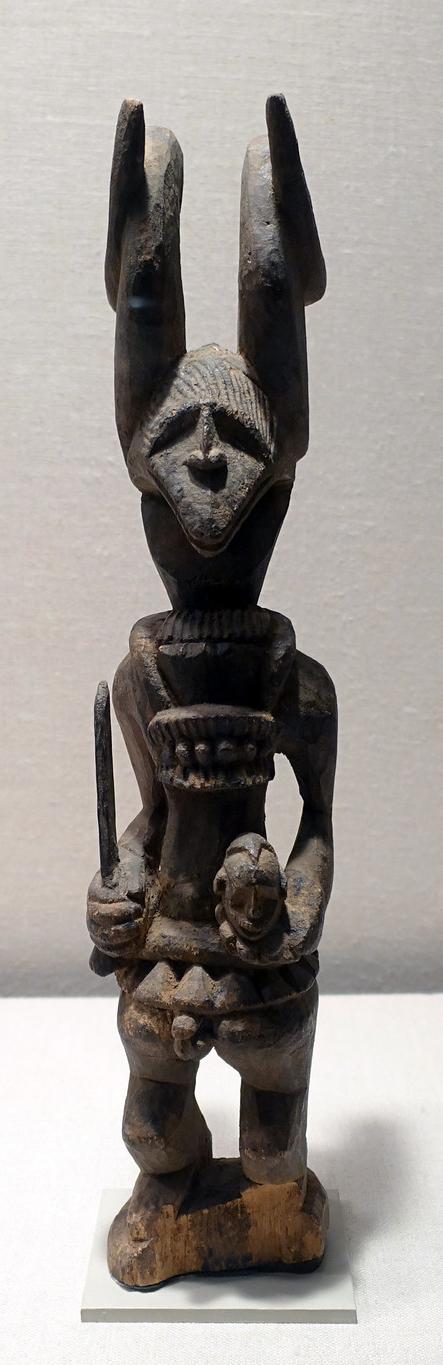
The ikenga — often represented as a carved wooden figure with horns — stands for personal strength, enterprise, skill, and achievement. It is the human capacity to work toward the destiny (akala aka) given by chi. Without ikenga, a favorable destiny may remain unrealized; with strong ikenga, even a challenging destiny may be reshaped.
The ikenga also represents moral responsibility. One’s success depends not only on effort but on upholding communal laws and customs, ensuring that achievement aligns with social harmony. In this way, ikenga bridges divine gift and human action.
Ọgbanje: The Challenger
Where chi, akala aka, and ikenga form the architecture of destiny, the ọgbanje is a force that disturbs it. The ọgbanje is a spirit-child bound to the spirit world, returning repeatedly to be born and die young, inflicting grief on a family.
The cycle is anchored by the iyi-uwa, a physical object — pebble, bead, or potshard — buried as the spirit’s tether. The finding and destruction of the iyi-uwa is the act that breaks the cycle. Achebe records this vividly in Things Fall Apart, when the dibia Okagbue Uyanwa unearths Ezinma’s iyi-uwa, ending her recurrent sickness.
Ethnographic accounts from the 1930s describe similar excavations: children leading elders to spots under banana groves or beside streams, where digging revealed the hidden token. This was followed by rituals of claim — sprinkling the child’s feet with special herbs, giving them a new name, and sometimes marking the skin to deter the spirit’s return.
The ọgbanje concept also enters moral discourse. A child prone to defiance or wandering might be called ọgbanje, not always literally but to signal their resistance to family order — a reminder that destiny can be a struggle for both the individual and the community.
Traditions Shaped by Destiny Beliefs
The reach of these beliefs extends into Igbo social and ritual life:
- Naming Ceremonies: Divination (Ịgba Afa/Aha) at birth often incorporates akala aka and inquiries to the chi, determining the child’s name, which may reference destiny. Achebe writes, “Chikezie implies that chi has restored a certain balance by that creation, or has at last apportioned share equitably. Of a man unattractive or deficient in character, we might say: chi ya kegbulu ya ekegbu. Here again there are two possible interpretations: either the man in question was created badly or else was cheated of his full share of things.” Naming in Igbo is believed to be indisputably important and never trivial. Consequently, many people of Igbo origin insist on giving their children Igbo names even in contemporary times.
- Marriage Alliances: Families may consult diviners to ensure that the chi of prospective spouses are compatible, and that destiny readings do not foretell early widowhood or infertility.
- Oath-taking and Dispute Settlement: Swearing an oath before one’s chi is a serious act; to lie under such oath is believed to invite destruction from the chi itself.
- Career or Trade Choices: A reading that aligns one’s chi with commerce or leadership could influence apprenticeship, migration, or even political ambition.
- Healing Practices: Illnesses resistant to herbal remedies may be treated as chi misalignment, an unfavorable turn in akala aka, or the disruptive work of an ọgbanje.
Colonial Reinterpretation and Postcolonial Memory
With the arrival of Christianity and British colonial rule, the Igbo framework of destiny entered a period of intense reinterpretation. Missionaries, translating Biblical texts into Igbo, frequently used chi to render “God” or “spirit” in the Christian sense, shifting the term from a personal destiny-guardian to a universal deity. This redefinition weakened the idea of chi as individualized guidance, replacing it with a singular God whose will applied equally to all.
The ọgbanje narrative met an even sharper clash. Colonial medicine dismissed it as superstition, recasting repeated child mortality as the result of malaria, sickle cell anaemia, or other diseases. Christian converts were often urged to renounce ọgbanje rituals and rely on prayer alone, though in many communities these practices continued discreetly alongside church attendance.
In literature, the tension between old and new cosmologies became a recurring theme. Achebe’s work stages it openly: Things Fall Apart shows Okonkwo’s world collapsing not only under colonial power but under the erosion of the belief systems that anchored concepts like chi. In Arrow of God, Ezeulu’s struggle is not just political but a struggle over whose calendar, whose destiny, will govern the community.
Contemporary writers revisit these beliefs with new sensibilities. Adichie hints at the layered persistence of destiny lore in Purple Hibiscus, where Catholic ritual and Igbo proverb share the same household air. Nnedi Okorafor’s speculative fiction takes ọgbanje into new terrain, reimagining the spirit-child not as a tragedy but as a figure of transformation and power.
Even in modern cities, traces remain. Names invoking chi are still given. Families still visit dibia for divination before major undertakings. In diaspora communities, ọgbanje has entered art, film, and performance as a metaphor for migration, resilience, and return. The colonial encounter did not erase these ideas; it forced them into new shapes.
Conclusion
The Igbo say, Onatalu chi no n’ihu, akala aka dolu n’obe aka — one’s nature is written on the face, while their destiny is literally heaped on their palms. The proverb reminds us that destiny is not a hidden abstraction but something inscribed in the body, waiting to be acted upon. The “palms” speak not only of fate-lines but of labour: the work of the hands, the discipline of effort, the cultivation of ikenga. To carry destiny in the palms is to be entrusted with its fulfillment through action.
Thus, while chi bestows the path and akala aka defines it, only through the strength of one’s diligence, talent, enterprise, and moral responsibility can destiny be realized. The proverb closes the circle: destiny is both inheritance and obligation, chosen before birth yet completed in life. Achebe’s characters wrestle with this; Adichie’s navigate it in quieter domestic struggles. The lesson is consistent: to ignore destiny is to court disorder, but to meet it requires not only submission to divine order but the willing work of human hands.


