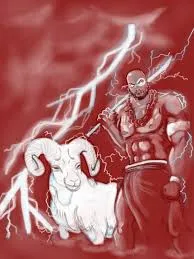
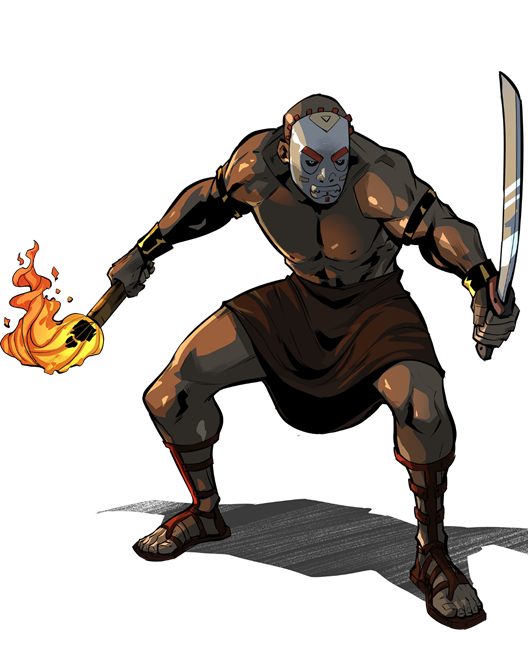
The story of Ogbunabali started with the screams of a masquerade in the middle of the night. As a child living in the confines of a traditional deep-seated village, Ogbunabali was one of the masquerades that brought chills whenever its name was spoken. The literal translation would be ‘one who kills at night,’ although Ogbunabali is not known to simply slaughter someone. Whenever the screams of its masquerade ring into the night, the people who tremble in their shoes are those who are fully aware of the atrocities they committed. The terror they felt was not just about the killing but about the public declaration of their deeds. Ogbunabali, also known as ‘Ikpoi ’ or ‘ Oyerenweze ’, is known to walk under the darkness of night, hunting for those who have committed atrocities. He would approach the suspect's house and annunciate every single deed they had done before either killing them or ostracising them. This is usually done within a space of four weeks, after which it disappears, never to appear until the next annual cycle. To Ogbunabali, sin is not just a crime against a person; it is an abomination against Ala, the earth goddess.
Many villages have their own versions of Ogbunabali’s tale but Oma’s Garden provides a clearer context to the night-killer’s work. The story begins in the earliest age, Uga Aka. In Igbo cosmology, ‘Uga Aka’ (also known as the first age) describes a time when humans existed as pure energies in the astral plane, as opposed to the material form of current times. During this time, humans were very much in contact with the gods, and they could live for as long as forever, a phenomenon that many would describe as immortality. However, humans remained inferior to the gods. In addition to their strength and immeasurable knowledge, the gods possessed Aru (a mystical knowledge shrouded in darkness), but they forbade humans from partaking in that knowledge. That didn’t bode well with Ekwensu, the custodian of the mysteries of the gods. He loved mankind and believed that they should have some form of consciousness given to them. It led him to give Nwanyi mmadu (woman of mankind) the gift of Aru. And, just like Eve in the Bible, Nwanyi mmadu ate this forbidden fruit, and her awakening jolted a higher consciousness in all mankind, giving birth to mysteries they had not previously considered. Ogbunabali, Ekwensu’s brother, discovered his betrayal and was furious. He reported the situation to the other gods, and Mmadu (mankind) was expelled from the realm of the gods. The gods were appalled that Ekwensu would give Mmadu access to the gods' confidential attributes. It made them believe that Mmadu would eventually move faster or, in the worst-case scenario, surpass them. It led to the dawn of a new era, Uga Chi (second age), and as Mmadu left the realm of the gods, their awakened consciences gave them a sense of self-actualisation and self-realisation, educating them on how to survive and coexist with one another. It was during this time that Mmadu evolved from pure energy into physical flesh. Ogbunabali, on the other hand, feared the presence of man's active consciousness. In response to Mmadu’s awakening, Ogbunabali assumed a new identity as the angel of death and the minister of justice for the gods, introducing death into Mmadu's lifespan. This was essentially to prevent Mmadu from surpassing the gods during their long lifeline, and Ogbunabali believed that it was one solution to repair his brother’s betrayal. However, Ekwensu persisted in his effort to help Mmadu. He gave Mmadu the gift of reincarnation, which is a recurring cycle of life that guarantees they fulfil their ongoing mission of continued enlightenment. Ekwensu’s betrayal didn’t go unpunished. In their anger, the gods promised that Mmadu would forget whatever goodness Ekwensu had bestowed on them, and he would be scorned for ages to come. Even so, Ogbunabali stayed firm in carrying out his role by ensuring Mmadu never abuses the power of their consciousness.
Alu (abomination) is committed, and as a child, the collective understanding that there is a “killer of the night” gave a certain debt to one’s existence. To be precise, stealing, lying, and even disobedience were met with a fear so great that just the thought of them was terrifying enough to jolt someone into accountability. Obgunabali, to many people living in the village, is neither a myth nor a story told to teach a moral like folklore; it is a gripping realisation that sin, once committed, is never hidden. However, this communal fear does not derive just from Ogbunabali. It stems from the strong understanding that is committed (even by a single individual) in a village, the villagers believe that the sin has polluted the land as a whole, and as a result, the whole village needs cleansing. One example of an Igbo village’s communal nature can be seen in Elechi Amadi’s (1958). The sense of community within Okonkwo's village is vividly illustrated, for example, during Okonkwo's blatant disregard of the sacred peace week by violently beating his wife, which would have affected the entire community if not addressed. This strong sense of community often invokes fear in villagers whenever they learn that Ogbunabali is prowling the neighbourhood, as any individual's wrongdoing could affect the entire village.
Uwa bu ahia (the world is a marketplace, from which one returns home after accomplishing a business transaction). In essence, every person must return home after death. However, even after death, an individual who has been ostracised from the community for committing an alu irrevocably severs their connection to their ancestral bloodline. Their soul is interpreted as doomed and incapable of joining the ancestors or even protecting their descendants as their counterparts.