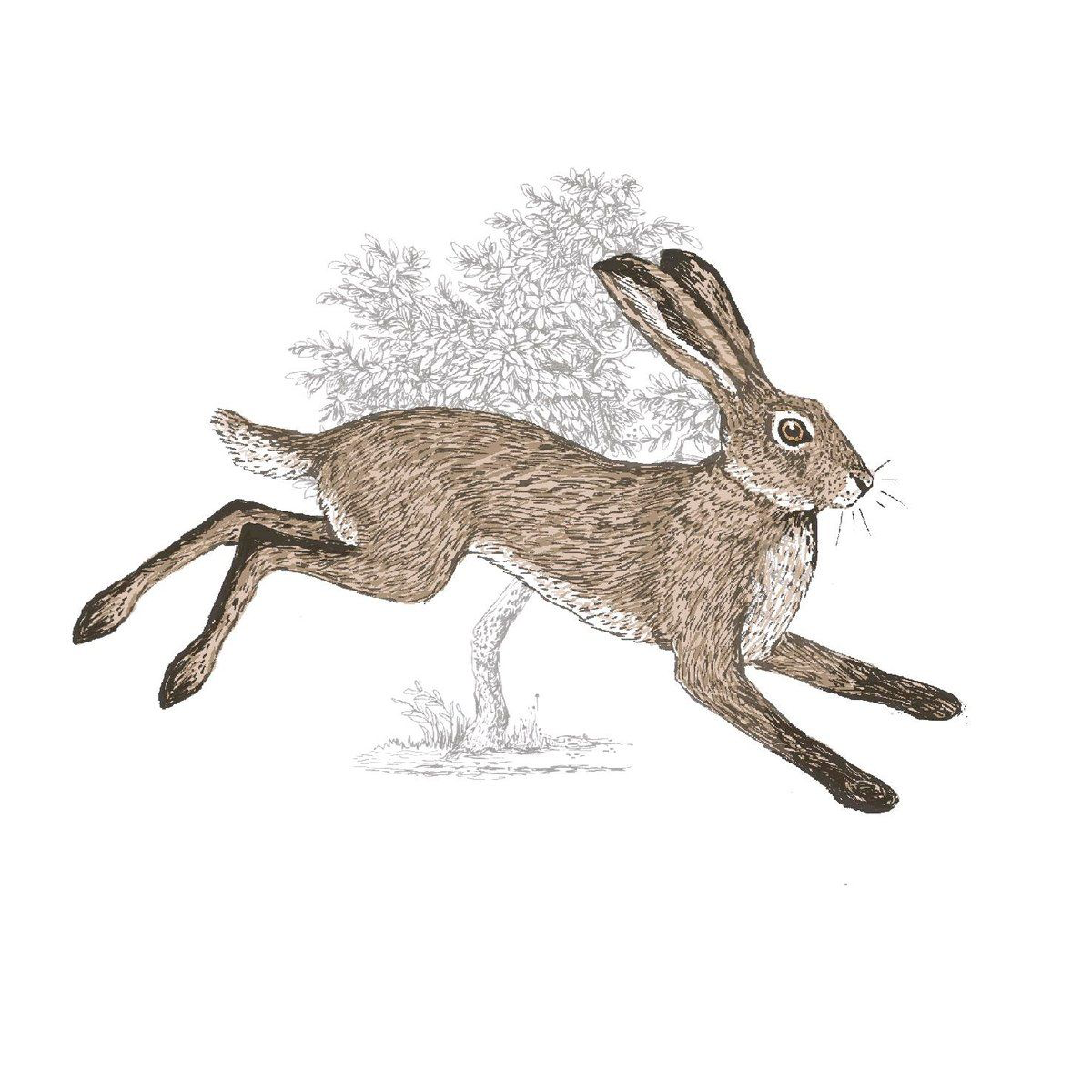
Alom the hare is a recurring character in many tales told by the Tiv people, which is why Tiv folktales are commonly called Kwagh-alom, “tales about the hare” or “something about the hare.” Like many tricksters in African storytelling, Alom appears weaker than the other animals but makes up for this disadvantage with his cleverness and wit. In many of these tales, Alom is not portrayed as a virtuous character or a hero who uses his cleverness to save weaker animals, or even his family. Instead, he often uses his quick thinking and resourcefulness, which are good qualities, to devise schemes driven by greed, deception, and laziness. Kwagh-alom brings these contradictions to life, portraying Alom as a character smart enough to outwit others, yet not wise enough to know when to stop.
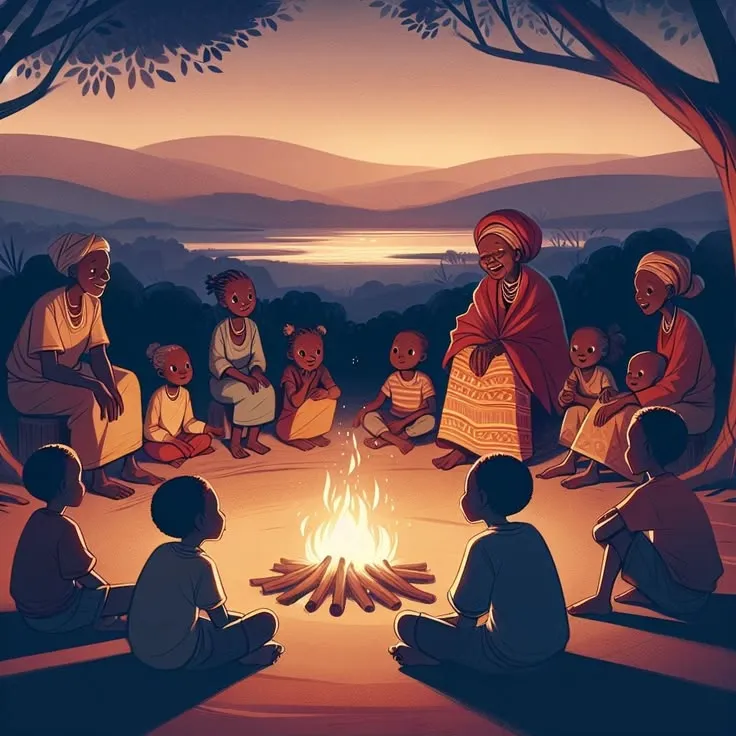
Before Kwagh-alom is told, the narrator usually begins with a riddle or a chant to call the attention of the audience. The chant used by the narrator goes like this:
“Kwagh-alom wam nahan ga ooo!”
“My folktale is not like the others”
The audience responds:
“Nahan ga oo, nahan ga ooo!”
“Not like the others, not like the others”
This brief exchange tells the listeners that the tale about to be told is different from the ones they have heard before and prepares them for something unexpected. With the audience now drawn to the story, the narrator begins the tale about Alom. One of Alom’s tales goes like this.
Long ago, during a period of famine in a village in Gboko, north-central Nigeria, Alom and his family went to the farm to cultivate the little maize seeds they had. But before they set out, Alom’s wife prepared a meal each day for the family to eat when they returned from the farm.
At the farm, the work was shared among them, still Alom was rarely eager to complete his portion. While his wife and children carried on with the day's work, Alom however seemed to find something to complain about. Sometimes, it was the sun, too hot for him to work under. Or the wind, blowing too hard and sending dust into his eye. Other times it was the hoe, too blunt to till the hard soil.
One fateful day, before Alom and his family set out for the farm, his wife, as always, prepared a meal for them to eat upon their return. This time, it was beans; Alom’s favourite. Once she was done, they made their way to the farm and began planting the seeds they had. But halfway through the work, Alom announced that he had an urgent matter to attend to at the village square.
He hurriedly left the farm, but not to the village square as he claimed. Instead, he went home, finding his way to the kitchen, where his wife had kept the pot of beans. Alom's stomach grumbled as he opened the pot, letting the aroma from the beans fill the small kitchen.
“Just two mouthfuls,” Alom said, as he tightly held the pot. But two mouthfuls became four. “Just one more” he promised. One more became another, until he had eaten half of the food.
When he had eaten to his fill, he stared at the half pot of beans, thinking of how to increase the quantity. He grabbed a cup of water, but quickly remembered that it would only make the beans watery. Just then, his eyes fell on a heap of sand outside the kitchen. He scooped up a handful of sand and set it aside. Then, he removed the remaining beans and poured the sand into the pot, filling it halfway. Carefully, he placed the beans back on top, spreading them until the sand was no longer visible. Alom chuckled at his cleverness. The pot looked as full as it had been before. Alom placed the pot back in its position, before making his way to the farm to continue working.
After the day’s work was over, Alom and his family returned from the farm, tired and hungry. So Alom’s wife quickly entered the kitchen and brought out the pot of beans to serve the family. She opened the pot. And when she scooped a portion of the beans, she discovered that half of the pot was filled with beans, and what was left underneath was sand. She stared at the pot, then at Alom.
“Did you eat the beans?” she asked.
“When would I have had the time to walk all the way home to eat? Have you forgotten that I went to the village square and returned to the farm immediately?” Alom questioned angrily. “I never even saw the pot,” he insisted.
She turned to the children and questioned them, but they also denied eating the beans. Filled with anger, Alom’s wife began to sing, calling upon the guilty one to be revealed.
Alom a lu we // Hare if it is you
U yam alev u mor gbor gbin // That ate my beans, let your stomach grow well.
Wan a lu we // Hare’s child, if it is you
U ya’m aleve mor daa laa // That ate my beans, let your stomach swell.
She repeated the song, naming every member of the family one after another. When she finished singing, nothing happened. Suddenly, Alom cried out. Before his wife and children, his belly began to swell and stretch outward. He screamed as it grew larger and larger, until he could barely stand upright. Alom couldn't speak, too ashamed to face his family.
Alom’s complete trust in his cleverness could not save him, at least this time. While his schemes allow him to avoid work, and even take more than his share, each act of cleverness draws him further from the communal values that govern everyone in the community. Such a character contradicts the well-celebrated Tiv philosophy of Yanaangbian, “eat and give to your brother.” Essentially, Yanaangbian reflects an understanding of life and resources as something to be shared within the community.