
The opening scene of Living in Bondage (1992) presents more than Andy Okeke’s ambition. It presents a country’s restlessness, a society haunted by sudden wealth, shaken traditions, and spiritual warfare in an age of uncertainty. Andy’s rise and ruin, played out on VHS tapes that circulated across Nigeria and far beyond, became more than a story. It became a reflection of day-to-day hopes and fears. In its tale of blood sacrifice, haunted riches, and eventual redemption, Nollywood’s first blockbuster condensed the anxieties of the Nigerian 1990s.
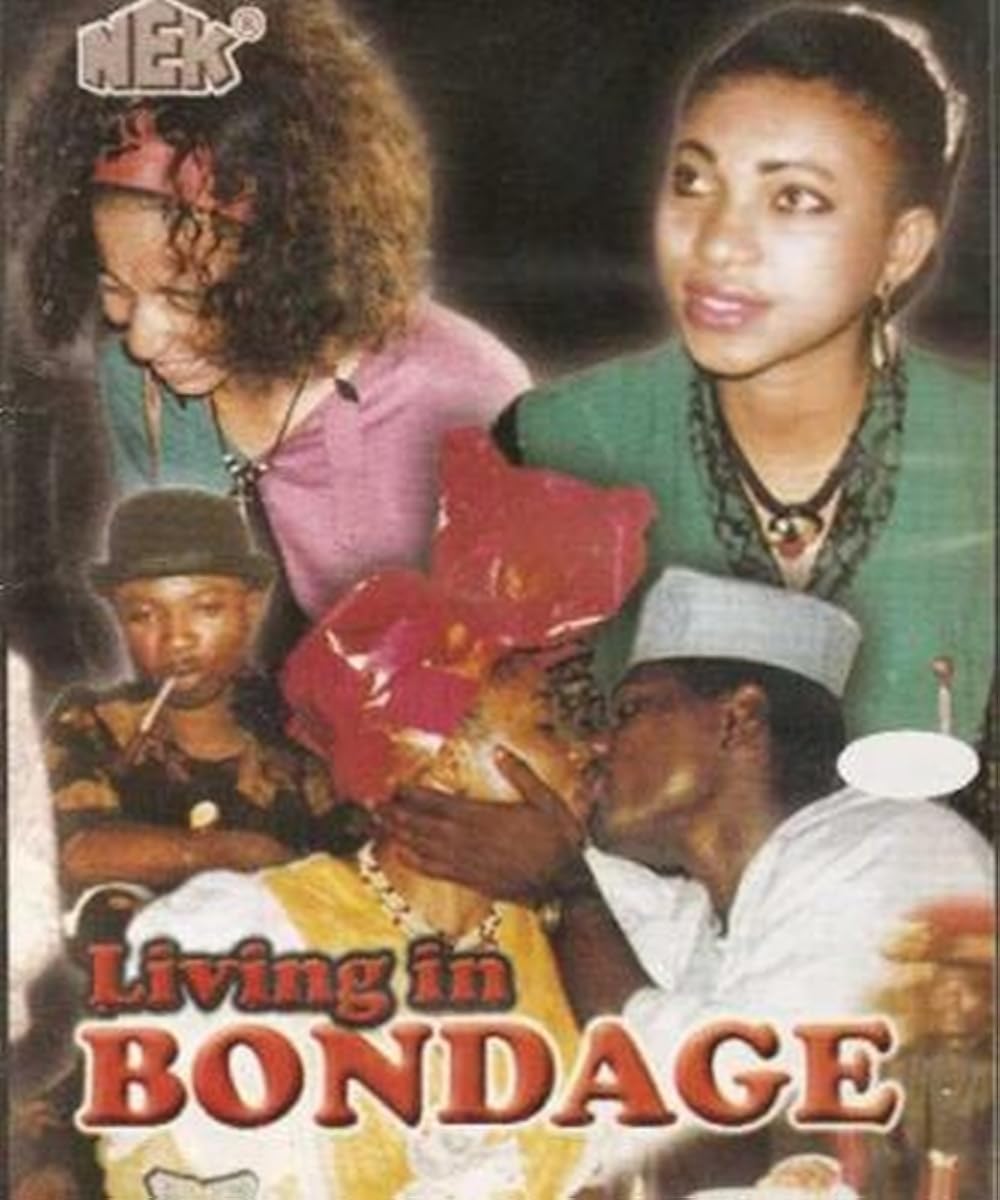
Living in Bondage (1992) cover photo. Photo Credit: https://www.imdb.com/title/tt0489511/
Nigeria in the Early 1990s: Crisis and Transition
To understand the power of Living in Bondage, one must first grasp its context. The early 1990s in Nigeria were years of military rule, economic shock, and social uncertainty. General Ibrahim Babangida and later General Sani Abacha tightened their grip on power, while corruption flourished and dissent met silence. The Structural Adjustment Programme (SAP), imposed under the guidance of the IMF and World Bank, stripped away subsidies, devalued the naira, and widened poverty. Middle-class families slid into precarity; salaries froze as prices rose. One Lagos resident told The New Internationalist in 1990, “Since SAP, there is not enough money … Before we used to get new clothes and shoes at Christmas.” Religion filled the void.
As the same report noted, “Religion has boomed in the four years since the Structural Adjustment Programme was introduced … most Nigerians trust GOD more than SAP to deliver them from poverty.” In this turbulence, ordinary people looked beyond economics to explain survival. They spoke of 419 fraud, of wealth without work, of ritual sacrifice. Rumors and pulp fiction carried these fears long before Nollywood gave them a face. The belief that wealth required human blood became a central narrative in newspapers, pulp novels, and urban rumor.

General Ibrahim Babangida. Nigeria’s Head of State (1985-1993). Photo Credit: https://www.bbc.com/news/articles/c8d4j3vrp8lo
At the same time, the Pentecostal boom transformed religious life. New churches promised prosperity and deliverance from unseen enemies. Spiritual warfare-filled sermons and radio broadcasts. For many Nigerians, the occult and the sacred existed within the same moral economy of survival. Into this atmosphere walked Andy Okeke — and through him, Living in Bondage became more than entertainment.
The Birth of Nollywood
Although Nigerian filmmakers like Ola Balogun had been shooting features since the 1970s, it was Living in Bondage (1992) that shifted the ground. Directed by Chris Obi Rapu and produced with Kenneth Nnebue and Okechukwu Ogunjiofor, the film was not Nigeria’s first feature, but it is remembered as the one that launched Nollywood as a popular force.
The film’s production reflected the harsh realities of the period. Shooting on celluloid was financially impossible in a country where investment in cinema had all but vanished. To work around these constraints, the producers turned to video. They bought blank VHS tapes from Taiwan and recorded the film directly onto them. Compared to Hollywood, the quality looked thin and the equipment amateurish. But instead of chasing slick aesthetics, they could not afford, the filmmakers leaned on what they did have: a story that spoke to people’s lives.
Released straight to cassette, Living in Bondage entered a market already saturated with VHS culture. Families owned VCRs, video clubs thrived, and television had become central to leisure. Unlike in Hollywood, where “direct-to-video” often signaled failure, in Nigeria it became the lifeblood of a new industry. The film’s distribution through markets in Idumota, Onitsha, and Aba ensured it reached households far beyond urban centers. Within weeks of release, the film sold over 500,000 VHS copies. Yet the secret of its success was not distribution alone. What gave the film its power was the way it tapped the moral pulse of the nation. At a time when rumors of ritual killings and “blood money” filled newspapers and street corners, Living in Bondage dared to dramatize these anxieties openly. Its story of Andy Okeke’s sacrifice and haunting gave voice to fears that many carried in silence. The actors were newcomers, the production was modest, and the plot melodramatic, but none of that mattered. The film resonated because it translated collective unease into a form that people could watch, discuss, and share. This is why Living in Bondage became more than a hit. It was a time capsule. It condensed into two VHS tapes the whispered suspicions, religious debates, and social fears of early 1990s Nigeria. In speaking to the conscience of its society, it not only found an audience — it created one, giving birth to a cinema rooted in the rhythms and anxieties of Nigerian life.
Wealth and the Occult
At its core, Living in Bondage tells Andy’s story. Frustrated by poverty, he longs for quick riches. Friends lure him into a secret cult. To gain wealth, he sacrifices his devoted wife, Merit. Although he builds his fortune, Merit’s ghost haunts him until he seeks Christian deliverance.
Such fears did not remain in fiction. In 1996, the Otokoto Hotel scandal in Owerri and the riots that followed confirmed how deeply the idea of “blood money” had entered public life. Newspapers reported suspicions that the city’s nouveaux riches had turned to ritual killings in pursuit of fast wealth. The outrage spilled from rumor into streets, anchoring what films like Living in Bondage had already dramatized.
The character of Merit, Andy’s wife, reflects this anxiety. Her death represents the belief that sudden prosperity often comes at the expense of kinship and morality. Wealth becomes literally cannibalistic, feeding on family bonds. Andy’s guilt gives room for a lesson of sorts: the price of money without morality is unbearable. The occult cult, in turn, reflects the shadow economies of the era — fraud syndicates, smuggling rings, and corrupt patronage systems. Andy’s haunted conscience mirrors the suspicion that fortunes in the 1990s rarely came clean.
Pentecostal Deliverance and the Spiritual Marketplace
By the late 1980s, Pentecostal Christianity had become one of Nigeria’s most powerful social forces. Archbishop Benson Idahosa, often called the father of Pentecostalism in Nigeria, had popularized a dynamic style of preaching that blended prosperity teaching with televised crusades and public displays of healing. His ministry opened the space for a new wave of charismatic leaders who defined the 1990s: David Oyedepo of Winners’ Chapel, Chris Oyakhilome of Christ Embassy, and the expanding influence of Enoch Adeboye’s Redeemed Christian Church of God.
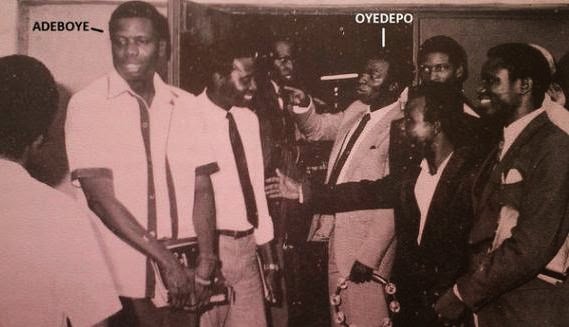
Pastor Enoch Adeboye and Bishop David Oyedepo pictured at a convention in Ibadan in 1986. Photo Credit: Linda Ikeji’s Blog
These churches did more than promise salvation. They gave Nigerians a way to navigate uncertainty at a time of economic collapse and political repression. Congregants found in them not only worship but also refuge, language, and community. The language of “deliverance” helped explain misfortune and offered hope in a world where corruption, sudden wealth, and spiritual threat seemed intertwined. For many, the church became a coping mechanism, a sanctuary where unseen battles could be confronted.
Living in Bondage reflected this atmosphere directly. Andy’s descent into the occult dramatized the widespread suspicion that riches in the 1990s demanded sacrifice. His haunting by Merit’s ghost gave a face to the idea that prosperity could come at an unbearable cost. But the film did not end with despair. Andy’s turning point came through a Pentecostal pastor, whose prayer of deliverance offered him redemption.
The conclusion mattered. By resolving Andy’s story within the framework of Pentecostal deliverance, the film echoed the religious mood of its era. It suggested that even in a time of betrayal, cults, and uncertainty, salvation remained possible through faith. In that sense, Living in Bondage was more than entertainment. It carried the same reassurance that drew millions into the new churches: the conviction that spiritual battles could be survived, and that redemption was still within reach.
Gender, Betrayal, and the Costs of Social Mobility
The treatment of gender deepens the film’s significance. Merit’s sacrifice is not incidental. Andy’s wealth requires her death. This reflects a broader anxiety about how capitalism commodified intimacy and kinship.
In Nigerian urban folklore, women often appeared as both victims and agents of ritual sacrifice. Rumors spoke of husbands killing wives, lovers betraying partners, or women using charms to entrap men. The body, and particularly the female body, became a currency in spiritual transactions.
Living in Bondage dramatizes this economy. Andy’s betrayal of Merit signals a collapse of social order. Love and loyalty give way to wealth and power. Her ghostly return restores moral order by punishing betrayal. In this way, the film reinforced values of kinship and fidelity while warning against the corruption of intimacy by greed.
From Blockbuster to Genre
The massive success of Living in Bondage produced sequels, including Living in Bondage II, and inspired countless imitators. Films such as Blood Money (1997), Rituals (1997), and Glamour Girls (1994) expanded the occult economy genre. Ritual sacrifice became one of Nollywood’s defining motifs during its first decade and almost became synonymous with actors like Kanayo O. Kanayo.
Blood Money (1997) Poster. Photo Credit: https://thenativemag.com/heres-list-scary-nollywood-films-watch-halloween/
Together, these films created a people’s archive of moral debate. They captured how Nigerians interpreted wealth, family, and modernity. Unlike elite art cinema, which often sought validation in European festivals, Nollywood’s VHS dramas spoke directly to Nigerian streets.
Onookome Okome argues that the occult film became a “moral pedagogy.” These films taught viewers how to interpret the strange economy of their time. Through melodrama and supernatural effects, Nollywood gave Nigerians a grammar for discussing issues often left to rumor and silence.
Nollywood as Social Archive
To call Living in Bondage an archive is to recognize the power of popular media. The film does not only entertain. It encodes fears, hopes, and negotiations of its society.
In the absence of reliable state records or formal histories of the 1990s, Nollywood films preserve cultural memory. They capture how Nigerian experienced SAP, not in graphs but in stories of “blood money.” They preserve the atmosphere of Pentecostal revival, not in church bulletins but in cinematic exorcisms. They reflect debates about kinship and betrayal, not in sociological surveys but in the sacrifice of Merit.
The home video format reinforced this archival role. VHS tapes crossed borders to Ghana, Cameroon, Kenya, and diasporic communities in London and New York. Nollywood became not only Nigeria’s mirror but also Africa’s vernacular cinema.
Conclusion
Three decades on, Living in Bondage is still more than a film. It is a record of a society at a crossroads — Nigeria in the grip of austerity, rumor, and revival. Its story of blood sacrifice and deliverance distilled the mood of a restless decade, when sudden fortunes raised suspicion and churches promised escape.
The film’s production on blank VHS tapes and its distribution through open markets showed how resourcefulness could outlast neglect. Its success lay not in polish or celebrity, but in its ability to make visible what many feared to say aloud. It spoke to the conscience of a people and, in doing so, created an audience that would become Nollywood itself.
To watch Living in Bondage today is to open a time capsule of the 1990s — a Nigeria wrestling with the price of wealth, the fragility of kinship, and the hope of redemption. Its questions remain alive: What does prosperity demand? How do unseen forces shape our lives? Where can salvation be found? Nollywood’s first blockbuster does not settle these debates. It preserves them, frames them, and hands them back to us, still unresolved, still urgent.


