
It is 6:58 PM. The sun is bleeding into the horizon, casting long, bruised shadows across the living room floor. The mother does not look at the clock, but she feels the time. Her movements, previously languid, become sharp and frantic. She moves to the front door, throwing the heavy iron bolt—clack—then turns the key twice. She checks the window seals. She pulls the curtains tight to ensure not a sliver of light escapes to the street.
Her children, born in a time of relative peace, watch this ritual with confusion. "Why can't we go to the junction?" the youngest asks. "The streetlights are on. The drones are patrolling"
The mother sighs. "There are things out there called Bandits. They look like men, but they are not men. They do not want your money, because money is paper. They want you. They wait until the sun dies, and then they come to harvest. If they touch you, you do not die (that would be a mercy). Instead, you vanish. You become a ghost that can only speak through a phone, begging to be bought back." She points to the locked door. "We lock the door not to keep the wind out, but to keep the world away. The road is a mouth, my children, and the Night has teeth.” She says the word Bandits not as one might say “thieves” or “militiamen,” but as one would refer to a malevolent spirit. In this domestic setting, the specific political definition of the criminal has vanished. What remains is the belief that the night belongs to a force that can only be hidden from.
This scene, while speculative, is not fiction. It is a possible sociological endpoint of Nigeria’s current trajectory. The events that will govern the movements of the next generation are being written right now, in the trauma of the present. We are witnessing the progression of Nigeria’s ongoing period of widespread violence (c. mid 2000s–present) from a political crisis into a formative cultural moment. To understand the future myth, we must analyse the corruption of language in the present. In contemporary Nigerian discourse, words like "Kidnapper" and "Bandit" have been stripped of their dictionary definitions. They no longer refer solely to individuals engaging in statutory crimes. Instead, they have evolved into buzzwords for a generalised, atmospheric threat. In the media and in private conversation, any form of large-scale organized crime is increasingly flattened into these two terms. When a traveller vanishes on the Abuja-Kaduna highway, or a community is sacked in the Middle Belt, the perpetrators are rarely identified by name or ideology. They are simply "The Bandits."
Anthropologically, this loss of specificity is significant. It signals that the violence has become so pervasive that it is viewed as a phenomenon of nature rather than the action of humans. Just as ancient cultures personified thunder as a god because it was powerful and unexplained, the Nigerian psyche is currently personifying insecurity. "The Kidnapper" is becoming a faceless entity that strikes without logic. Over time, such linguistic shifts tend to stabilise; "The Bandits" will be the monsters of a new oral tradition, representing the chaos that waits outside the gate.
The manifestation of this fear is geographical. We are currently witnessing a redrawing of the Nigerian map based on the logic of trauma. This is most visible in the anxieties surrounding the National Youth Service Corps (NYSC).

For decades, the NYSC was intended to foster national integration by moving youth across ethnic lines. Today, it has become a theatre of parental terror. Parents in the South now swear that their children will never tread on Northern soil. Through a combination of bribery, medical reports, and fervent prayer, families manoeuvre to ensure their wards are deployed within "safe" zones, the south and Abuja. In a recent uproar on X, prospective corpers and concerned citizens gave their opinions on a now nullified report that pages of a supposed NYSC handbook contained a section titled “Advisory Action When Kidnapped or Taken Hostage.” An X user in November 2025, @UnkleAyo, wrote:
“Your parents didn't spend all that money on your education, only to go and throw your life away in danger-encapsulated zones like Borno/Yobe, as NYSC corp members. Your Government cannot even guarantee your safety + the NYSC is useless btw. It is not worth it. STAY AT HOME.”
This post has over 280000 views on the platform. Many anecdotes of bribery and parents’ interdiction filled timelines following the release of call-up letters.
This behaviour is gesturing towards a dangerous sociological consequence: the fictionalization of the Other. To many in Southern Nigeria, the North has transformed in the imagination into a lawless and uniformly violent space—a caricature that often defies the reality of millions of people living normal lives in Kano or Kaduna. Yet, this fear is treated as absolute truth. By shielding their children from these regions, parents are inadvertently incubating a generation that views vast swathes of their own country as terra incognita, a forbidden land inhabited by the mythic "Bandits."
By the mid-2020s, the Nigerian citizen has developed a rigid set of behavioural protocols enacted daily to ward off the spectre of abduction. This code is built on non-negotiable rules like: Lock your doors before dusk, avoid the highways, and never travel at night. The fear of "The Road" has created a stark economic caste system of safety. We see this in the middle-class family that starves itself of luxuries for months, saving every Naira not to buy land or pay school fees, but to afford flight tickets for a 45-minute journey they could have driven in four hours.
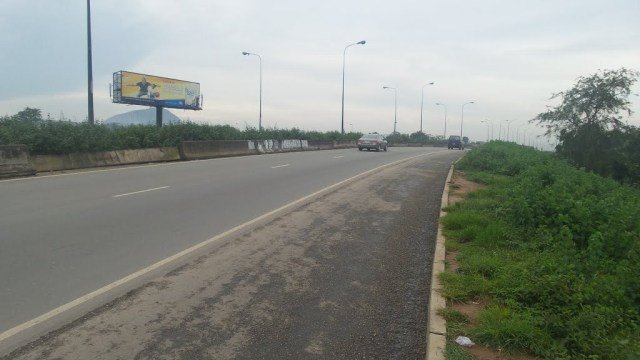
A May 2019 editorial by Punch Newspapers captured the onset of this paralysis, noting:
"TRAVELLING on the Abuja-Kaduna Highway has become an unspeakable nightmare for Nigerians, thus highlighting the deteriorating state of security in the country. Last Monday, dare-devil gunmen kidnapped the Chairman, Universal Basic Education Commission, Muhammad Abubakar and his daughter; they also shot his driver dead. Many others have been declared missing."
When high-ranking officials could be erased from the highway in broad daylight, the average citizen perceives the road as the domain of the "Bandits," while the sky is viewed as the only remaining sanctuary. This behaviour, seemingly rational in the face of such headlines, is rewiring the collective psyche. It reinforces the idea that the ground itself is hostile. In the folklore of the future, the "Earth" may be depicted as the realm of danger, while the "Sky" is the realm of the protected elite.
This avoidance extends to the domestic sphere. The "6:00 PM Rule" has become the defining routine of the Nigerian home. To the future ethnographer, these combined behaviours might look like ritual superstition. But to the citizen of 2025, they are the only available shield in a state where the social contract has collapsed. The "Night" is not just a time of day; it is a jurisdiction where the government does not exist.
The uprising will eventually pass, hopefully. Insurgencies end; crime waves recede. However, the cultural habits formed during these periods often outlive the violence itself.
Fundamentally, we must recognize that myth is rarely a flight of pure fancy; it is the retelling of a reality that has become sufficiently abnormal. As Bronislaw Malinowski observed, myth functions as a social charter, legitimizing behaviour under conditions of uncertainty rather than describing events with historical precision. Mary Douglas similarly showed in her seminal 1966 work, Purity and Danger, that when institutional control weakens, societies reorganize danger symbolically, transforming material threats into moral boundaries.
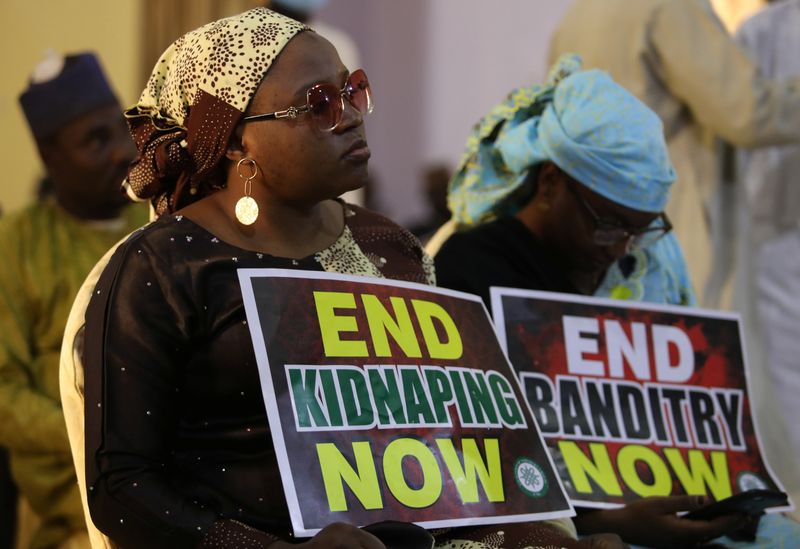
The great mythological expositions and urban legends that define our history are likely not entirely supernatural inventions, but functional archives. They are linguistic vessels created to give shape to inexplicable experiences, educational tools designed to prevent the lethal consequences of ignorance, and coded transmissions of a society’s daily interactions, fears, and solutions. When a reality becomes too dangerous to be described by mere facts, it is encoded into legend. Jan Assmann’s theory of cultural memory helps explain this shift: as lived experience gives way to inherited instruction, the original causes of fear recede while the practices remain. Thus, the "supernatural" is often just the "sociological" wearing a mask to ensure the lesson survives the teacher.
We are currently raising a generation on the doctrine of the locked door. We are teaching them that safety is synonymous with immobility, that the "Other" is a threat, and that the night is a forbidden territory. When the guns finally fall silent, these lessons will remain.


