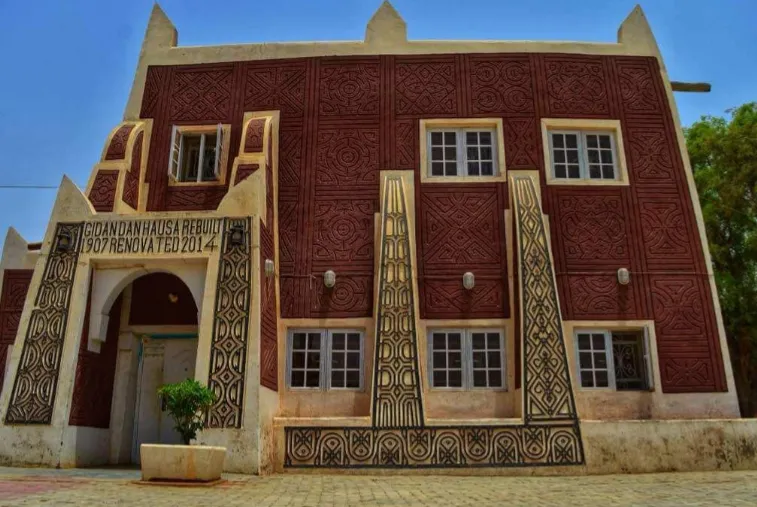
In the oral and written traditions of the Hausa people of northern Nigeria, the founding of the seven original states, collectively known as the Hausa Bakwai, is a mythological account that weaves together divine mandate, supernatural genealogy, and cosmological order to explain why certain dynasties held power and why certain cities stood where they did. The myth centres on Bayajida, also rendered as Abu Yazidu, a prince said to have originated from Baghdad who journeys westward, settles in Daura, in present-day Katsina State, and through a series of supernatural encounters fathers the lineage that produces the seven legitimate Hausa states. To understand its political legacy, however, one must first examine its mythological architecture: the sacred serpent, the sovereign woman, the structured emergence of dynastic identity, and the ordering of states into a hierarchy that mirrors a cosmological scheme far older than the dynasties it was later made to sanction.
According to accounts preserved in the Kano Chronicle and documented by scholars including Mervyn Hiskett and M. G. Smith, Bayajida flees Baghdad, travels through Bornu where he marries the daughter of the Mai, and arrives in Daura, a city then ruled by Queen Daurama. The city's well, Kusugu, is besieged by a great serpent known as Sarki (the Hausa word for king or chief) which prevents water-drawing on any day but Friday. Bayajida slays the serpent. In gratitude, Daurama grants him half the city and later marries him. Their son, Bawo, fathers six sons. Together with Biram (Bayajida's son from his Bornuan wife) these become the founders of the Hausa Bakwai: Daura, Kano, Zazzau, Gobir, Katsina, Rano, and Biram.
That the serpent is named Sarki is not incidental. In Hausa spiritual tradition, serpents occupy a significant place within the iskoki world (the domain of spirits governing natural forces and territorial sovereignty). The snake at Kusugu well is not a monster in the European fairy-tale sense but a figure of chthonic guardianship, a being whose authority over the well is cosmological rather than merely physical. Control over water in a semi-arid environment is control over life itself, and the entity that regulates that access holds, by extension, a form of kingship. When Bayajida kills the serpent, he does not simply clear an obstruction. He transfers cosmological authority from one order to another.
The Friday restriction on water-drawing is widely regarded by historians as a later Islamic interpolation, a textual seam where one worldview was stitched over another. Beneath it lies a pre-Islamic cosmology in which sacred beings controlled access to life-sustaining resources through calendrical law. The reworking of this element during the long process of Islamisation across the Sahel reflects a pattern that Mervyn Hiskett documented throughout the region: myths were not discarded but adapted, their internal logic realigned with Islamic sacred time while their structural function remained intact.
Queen Daurama presents a separate and underexamined dimension of the myth. She rules independently. She commands a city. She negotiates the terms of her own displacement. Historians and anthropologists working on pre-Islamic Hausaland have noted evidence of earlier matrilineal or dual-gender systems of political organisation, and Daurama's prominence in the founding narrative encodes what appears to be a historical memory of that transition from female-centred or jointly governed political structures to the patrilineal dynastic order that Bayajida's line establishes. Her marriage to Bayajida fuses indigenous sacred authority with a new, externally originating line, producing a legitimacy that is both rooted and imported.
Across a range of cosmological systems, the number seven functions as a structuring principle. In the Hausa context, the seven sons of Bawo (plus Biram) represent a sacred political taxonomy in which each state is assigned not merely a territory but a function. Daura holds sacred origin. Kano carries trade and population. Zazzau extends southward into frontier territory. Gobir guards the martial edge. Katsina commands scholarship and commerce. Rano is agricultural. Biram holds the eastern connection to Bornu, the empire from which Bayajida himself had come. M. G. Smith observed that the hierarchy among the Bakwai was functional as well as genealogical: by attributing these roles to the sons of a divine ancestor, the myth sacralises a division of political labour and presents it as cosmologically ordained. To challenge the arrangement was not merely to challenge a king but to challenge the order of things.
Parallel to the Bakwai were the Banza Bakwai (Zamfara, Kebbi, Nupe, Gwari, Yauri, Ilorin, and Kwararafa), significant polities that nonetheless fell outside the sacred genealogy. The distinction between the legitimate seven and the "bastard" seven was not simply a matter of dynastic pride. It functioned as a cosmological boundary, a line between belonging and exclusion that had administrative and ideological consequences for how these states were regarded, treated, and incorporated into broader political arrangements.
Bronisław Malinowski's concept of the charter myth is useful here, though it should not be applied too mechanically. For Malinowski, myths of this kind validate existing institutions by locating their origin in sacred time, beyond the reach of ordinary historical scrutiny or political contestation. The Bayajida narrative performs exactly this function. Ruling dynasties across the Bakwai traced their legitimacy directly to Bayajida, and the Kano Chronicle, one of the most important primary sources for the pre-colonial political history of northern Nigeria, embeds its account of political succession within the sacred genealogy, making the two inseparable. Legitimacy was not a matter of military strength or popular consent but of traceable descent from a figure who had himself demonstrated cosmological authority by defeating the guardian of the sacred well.
The myth also performed a unifying function that operated across political boundaries that were, in practice, frequently contested. The Hausa-speaking city-states were politically independent, often competitive, and occasionally at war with one another. The Bayajida narrative gave them a shared cosmological ancestry: a common father, a single act of founding violence, a structuring number that encompassed them all. It functioned, in this sense, as a mythological constitution: a document that could not be amended, that preceded all particular political arrangements, and that allowed both unity and distinction to coexist within a single framework.
The Fulani jihad of 1804, led by Usman dan Fodio, transformed the political landscape of the region profoundly. The Sokoto Caliphate that emerged from it introduced new frameworks of legitimacy rooted in Islamic political theology — frameworks that, in principle, superseded genealogical claims derived from pre-Islamic founding myths. In practice, however, the Bayajida myth proved resilient. Its Baghdadi origin story for Bayajida, always somewhat convenient, became more convenient still: Baghdad was the seat of the Abbasid Caliphate, the historic centre of Sunni Islamic authority. An ancestor from Baghdad was not a pagan progenitor but an Islamic one. The myth absorbed its new context without dissolving into it. As Hiskett noted, this kind of harmonisation was common across the Sahel, where the arrival of Islam rarely produced a clean break with existing cosmological frameworks but rather a long, layered process of negotiation and reinterpretation.