Durban’s Street “Chow” as an Artifact of Apartheid Resistance
The Bunny Chow originated among Indian South Africans in Durban during the 1940s. At first glance, it looks like just any clever street food, but look closer and you will see something else: a loaf of bread doing the work of political resistance. Its structure, its entire reason for existing, traces directly to apartheid-era segregation laws. When the state made it illegal for people to eat together, when disposable containers were scarce or expensive, someone figured out that bread could do the job just fine. And it did.
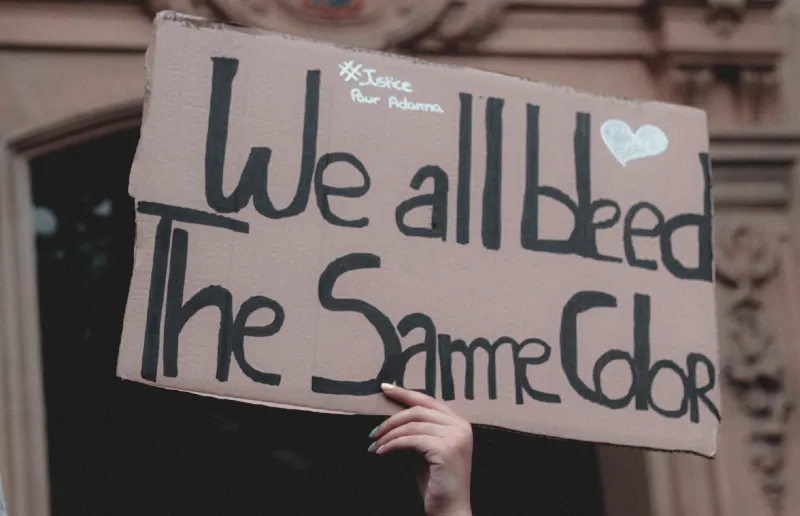
The apartheid system was divided into two operational categories. "Grand apartheid" handled the big things like where you could live, whether you could vote, how the state carved up the country by race, etc. "Petty apartheid" took care of the daily indignities: it segregated parks, beaches, buses, bathrooms, and restaurants. If you were not white, you could not eat inside most establishments. If you were Black or Coloured, you definitely could not eat inside Indian-owned restaurants, no matter how hungry you were —or how much money you had. This created a straightforward business problem for Indian shopkeepers in Durban's city center. Thousands of Black African and Coloured laborers worked downtown. They needed lunch. The shopkeepers wanted their money. The law said these customers could not come inside to eat. Serving takeaway curry should have been simple, except that curry is liquid: it is hot. It needs a container that won't fall apart, leak, or cost more than the meal itself. In the 1940s, that kind of container was either impossible to find or too expensive to make sense economically. Someone looked at a loaf of bread and saw a solution: hollow it out, fill it with curry, hand it out the window, and voila: the customer gets a complete meal they can carry away and eat somewhere else. The bread soaks up the gravy, making it easier to eat by hand. No plates, no bowls, no lingering in doorways that might attract the attention of police enforcing racial codes. Everybody, except the apartheid enforcers, won.
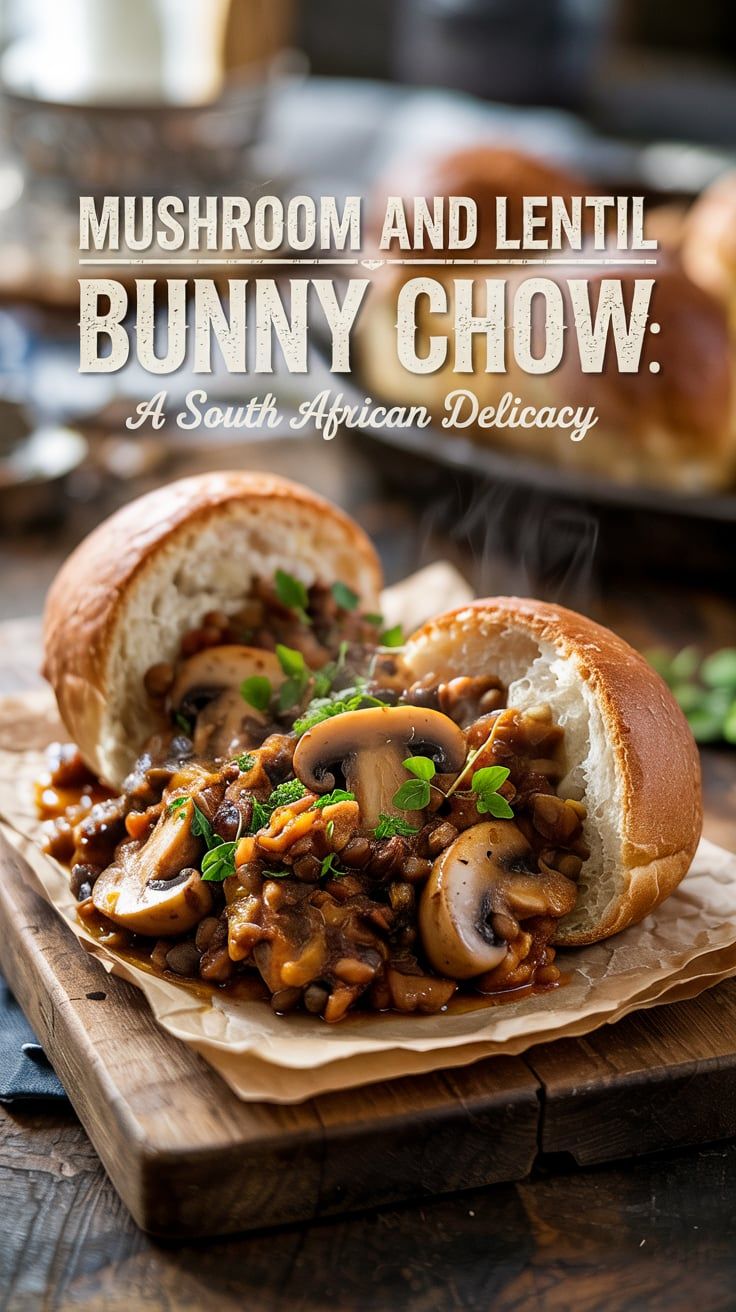
The exact origin of the Bunny Chow involves competing stories, but the basic facts are solid: the dish emerged in Durban's Indian community during the 1940s. The center of this development was Grey Street, which functioned as the commercial hub of Indian business activity in the city. One strong candidate for the birthplace is the G.C. Kapitan Vegetarian Restaurant, which operated from 1912 to 1992. This establishment became famous for its vegetarian "beans bunny" (years later, Nelson Mandela would reportedly enjoy it at a Johannesburg branch). The early emphasis on vegetarian versions makes sense given that many South African Indians, particularly from Hindu communities, didn't eat meat. Only later did the dish expand to include mutton, chicken, and beef fillings.
The name itself is a historical document. "Bunny" is an anglicised corruption of "bania," a term referring to the merchant or shopkeeper caste of Indian tradesmen who ran businesses on Grey Street. "Chow" just means food. So "Bunny Chow" translates to "food from the shopkeepers." This etymology matters. If the defining feature was just the bread container, the dish might have been called "Curry Bread" or "Bread Bowl." Instead, the name directly credits the business class that invented it: the bania, who were navigating a hostile regulatory environment while maintaining their livelihoods. The name preserves that story.
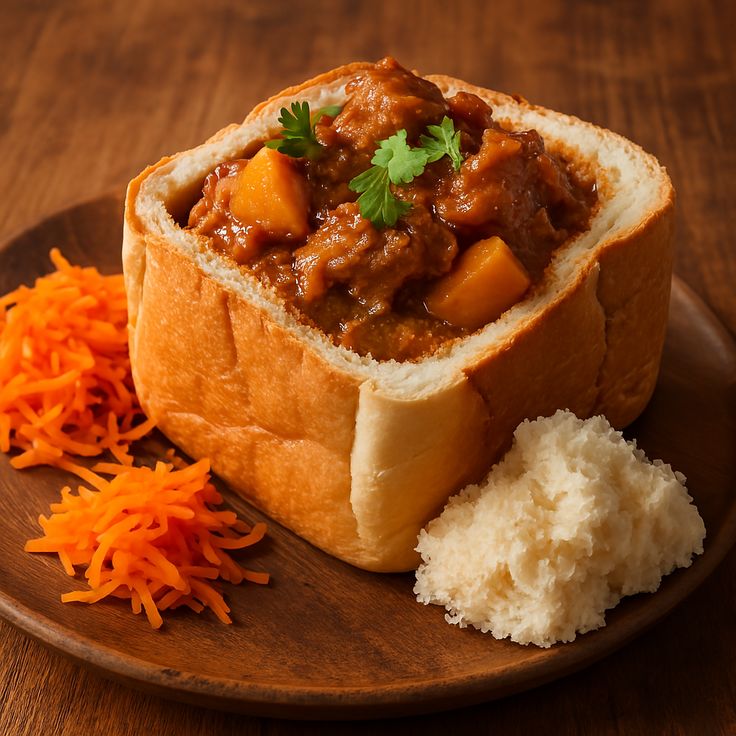
The functionality depends on specific materials and techniques. The bread must be a particular type: a crusty, unsliced, rectangular loaf, often called a "Government sandwich loaf" locally. These loaves get cut into quarters, known as "kota," or into halves or full loaves, depending on how hungry you are. To prepare the vessel, you remove the soft interior with a sharp knife, leaving thick walls and a bottom that can hold liquid without immediately disintegrating. The bread you remove —called the "virgin"— gets placed on top of the filled loaf; it becomes your first eating utensil, meant to soak up gravy before you start tearing into the walls with your hands.
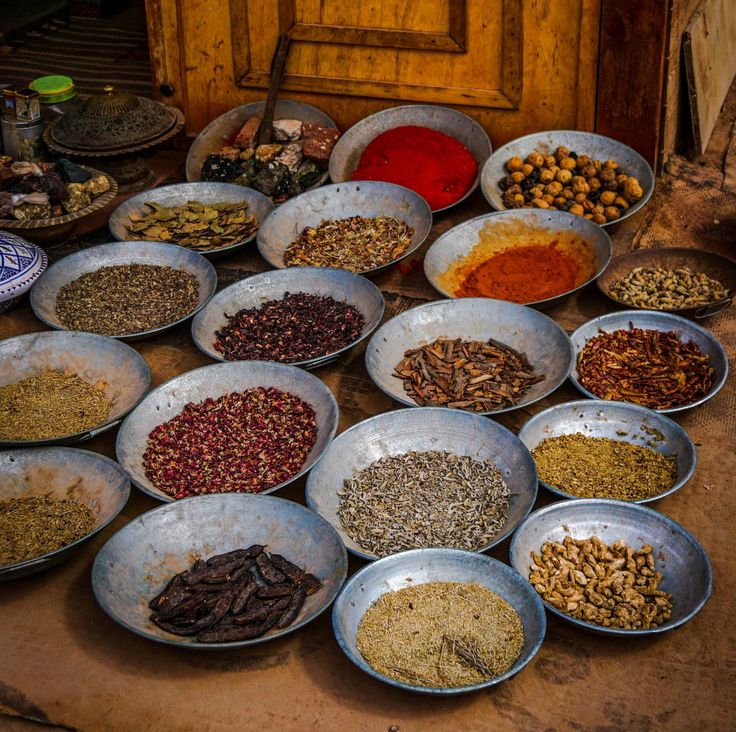
The curry filling is engineered for containment. A thin, watery curry would destroy the bread vessel instantly and defeat the entire purpose of using bread in the first place. The solution, then, was the thick-by-design Durban Curry. Preparation starts with frying whole spices like cinnamon, cardamom, and fennel, then adding powdered spices like Durban masala and turmeric. You heat these until they stick to the bottom of the pot before adding any liquid. Cubed potatoes that appear frequently in the Bunny Chow serve multiple functions: they fill space, add substance, and absorb excess moisture. The starch they release thickens the gravy further and helps prevent the bread walls from collapsing too quickly. Every element of the dish works together: the curry and the container form a co-dependent system, designed to survive being carried through city streets by workers on lunch breaks.
Important to mention: the dish is eaten without cutlery. You use your hands.
The Casbah was the commercial, political, and cultural center of the Indian community. It operated next to the white Central Business District but functioned according to different rules. The apartheid state tried repeatedly to destroy it, but the Casbah survived. More than that, it became a space where apartheid logic broke down. Scholars Ashwin Desai and Goolam Vahed describe how the Casbah allowed people of all races to "jostle and mingle, tasting a life beyond apartheid, if only for a moment." In a society built on forced separation, the Casbah created the opposite: a place where interaction couldn't be prevented. The Bunny Chow was central to this.
As a cheap, portable food that anyone could buy, it created a reason for people to come to the Casbah and interact across racial lines. The transaction itself was an act of defiance. Buying and eating a Bunny Chow meant participating in an economic space that rejected the racial hierarchy the state tried to enforce. The dish connected petty apartheid restrictions on where people could eat to resistance against grand apartheid's spatial control agenda. It solved a practical problem but created something larger: a shared cultural touchstone that fostered unity between different racial groups. This wasn't the dramatic resistance of mass protests. It was a quieter, everyday resistance embedded in the simple act of selling and buying, and eating lunch.