
For ages, the dominant narrative has been that Christianity conquered the Nigerian indigenous religions. But reality proves otherwise. The average Nigerian Christian has not abandoned the cosmology of their ancestors; they have simply baptised it. What many practice today is a unique hybrid of a faith that uses the Bible as its constitution but operates on the bylaws of the African Village. Situations like this have led many to ask: Are religion and culture mutually exclusive? Can an African be truly Christian in the solemn, orthodox dispensation of the religion? To answer this, we must examine the specific mechanics of this merger. You do not worship traditional deities simply because they are "good"; you worship them because you want rain, protection, or harvest. If the deity fails to provide, the devotee stops the sacrifice. On the other hand, in classical Christian theology, grace is fundamentally unprovoked. It is not a reaction to human initiative, but a gift that precedes it.
This psychology is identical to the traditionalist carrying a goat to the grove. The goat has been replaced by an envelope, and the priest by a Pastor, but the underlying logic remains. The question is no longer what God wills, but what sacrifice is sufficient. This subtle inversion matters, because it reshapes the Christian God from a giver into a negotiator and faith from trust into technique.
In the African pre-Christian structure, the Dibia or Babalawo was an intermediary who had eyes that saw into the spirit realm. He could diagnose the source of your problem and prescribe the cure. Today, the Nigerian "Man of God" (Daddy, Papa, Bishop) occupies this exact sociological space, especially within the more flexible Pentecostal settings. In much of Western Christianity, the Pastor is primarily a shepherd and a teacher. In Nigerian Christianity, the Pastor is an Oracle of sorts. The reverence accorded to the General Overseer mirrors the sociological concept of the 'Big Man.' In this system of religious patrimonialism, authority does not reside in the institution or the scripture, but in the charisma of the individual leader. The kneeling, the inability to look him in the eye, the rush to touch his garment, mirrors the reverence once accorded to the Chief Priest.
We see this in the obsession with Prophecy and Deliverance. A service is often considered ‘dry’ if the Man of God does not single someone out and reveal their phone number or their village address. Why? Because the average worshipper is historically conditioned to seek divination. They want a seer who can reveal the hidden cause of their suffering, just as their grandfathers sought the diviner’s beads.
Perhaps the most potent crossover is the concept of Causality. While the West operates in what sociologist Max Weber called a 'disenchanted' world governed by physics and probability, the Nigerian operates in a distinctly Enchanted Universe where there is no such thing as a ‘mere accident’. If a young man dies in a car crash, it is not physics; it is spiritual. If a business fails, it is not economics; it is ‘Village People.’ This worldview has birthed the specifically Nigerian genre of ‘Warfare Prayer.’ Western Christianity largely focuses on the internal battle against Sin (pride, lust, greed). Nigerian Christianity focuses on the external battle against Enemies (witches, household wickedness, monitoring spirits). The midnight vigil, a staple of Nigerian faith, is a direct adaptation of the traditional understanding that spiritual transactions happen at night. We fire ‘Holy Ghost Fire’ to result in a ‘back to sender’ verdict against a remote personal tormentor.
Is this hybridisation a deliberate mixing? Largely, no. Anthropologists might describe this as a kind of religious bricolage, that is, the act of constructing a solution using whatever tools are at hand. The Nigerian convert did not sit down to mix religions. Rather, when faced with the harsh realities of life in a developing nation, they reached for the tools that made sense to their psyche.
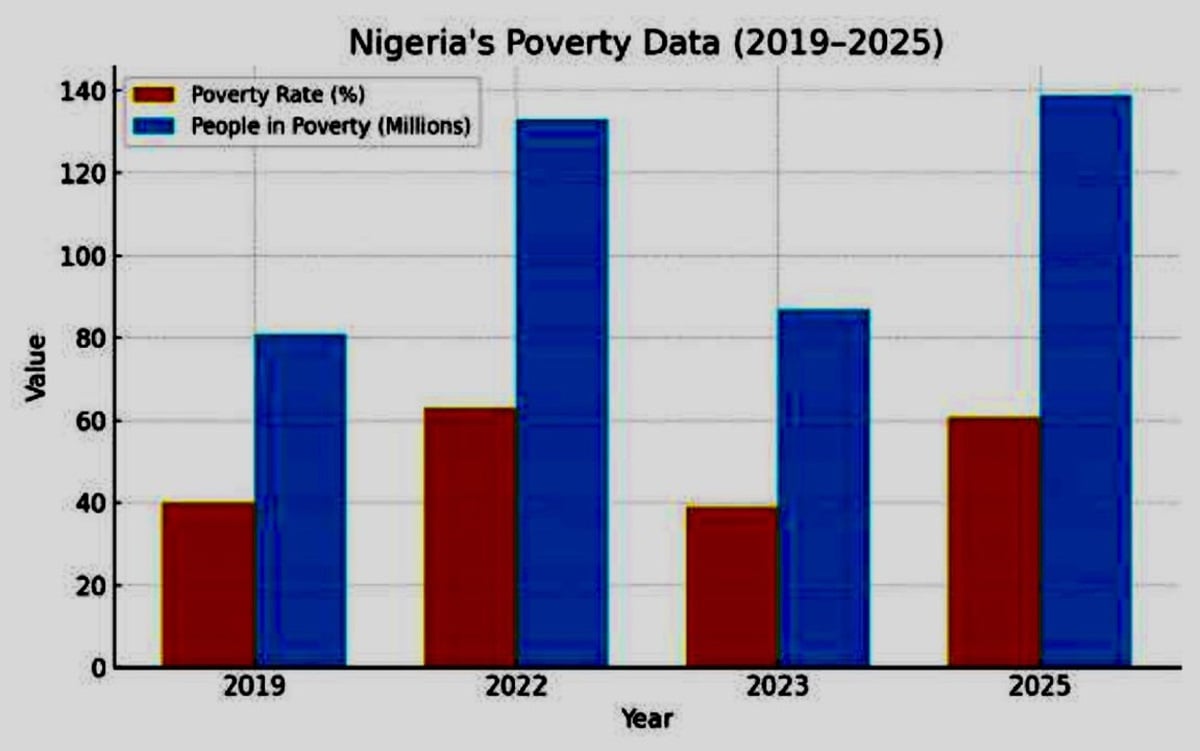
Recent reports from PwC suggest that Nigeria’s poverty rate may rise to 62% by 2026. This stands in stark contrast to the 17.4% reported in Europe by Eurostat in 2025. Therefore, it is almost insensitive to expect a conservative worship style from the average Nigerian, because the basics of life are neither basic nor accessible and the only way out might just be divine intervention. The European missionary brought a God who promised a mansion in heaven. The African needed a God who could provide a job and protect them from a jealous relative. The gap was filled by adapting the old ways, many of which are mainly survival responses
The implications of this crossover are profound. It has created a religion that is intensely materialistic. Because the traditional gods were worshipped for earthly results (harvest, fertility), the Nigerian God is often measured by the same yardstick. A testimony in church is rarely about ‘finding peace in suffering’; it is about ‘a new car, a new visa, breaking shackles, pummelling enemies.’ We have created a faith that is mile-wide in power but inch-deep in
the theology of its founding fathers. We have successfully evangelised the gods of our ancestors, baptised them, and given them microphones. This materialism is ironic because it thrives in congregations that are made up of individuals who are mostly underprivileged.
This hybridisation has also resulted in the dangerous use of religion to justify activities that are clearly unbiblical and improper. When spiritual authority becomes absolute, accountability begins to feel sacrilegious. A leader believed to possess unique access to the divine is rarely challenged, even when behaviour contradicts the faith he proclaims. The result is not merely bad theology, but vulnerable communities placed at the mercy of unexamined power. This dynamic explains why some congregants abandon medical treatment, suspend employment, or remain indefinitely at these prayer mountains or warfare houses.
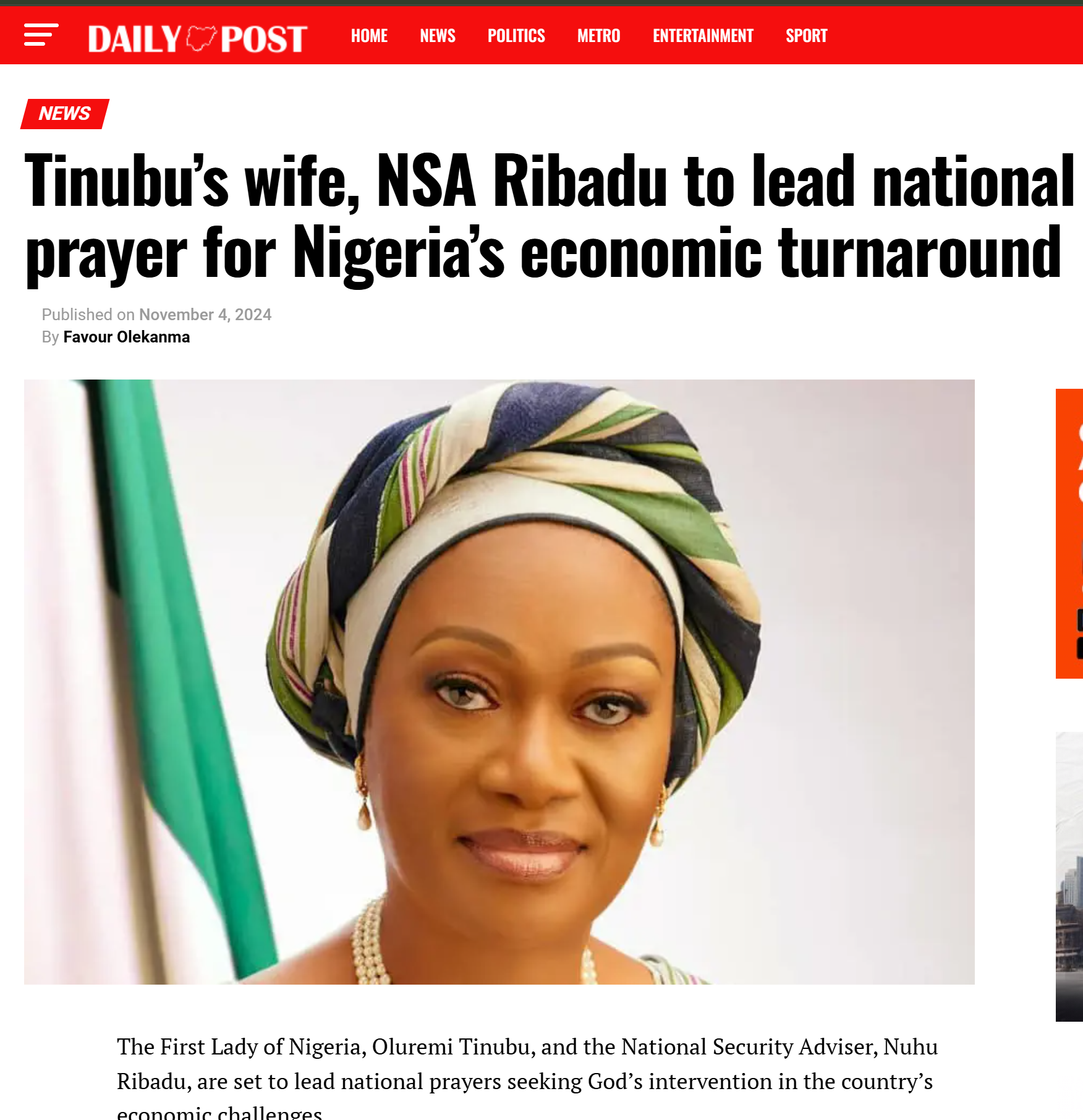
It can also be seen in the characteristic reliance on the supernatural by Nigeria's political elite. This is often an excuse for the abdication of responsibility. We frequently witness the spectacle of leaders who have failed to provide basic infrastructure urging citizens to ‘pray and fast for the nation,’ effectively outsourcing their constitutional duties to the Holy Spirit while governance collapses.
One could argue that if true Christianity is upheld by the strict biblical standards rather than these tenets that have been transformed by culture, then many may be gravely mistaken about the nature of salvation itself. To analyse Nigerian Christianity is to act as an archaeologist of the spirit. If you dig beneath the suits, the microphones, and the stained glass, you will find the pot shards of the village shrine in the mighty hands of a troubled society. This does not mean the faith is false or corrupted; it means conversion was incomplete. Ritual changed faster than worldview, and theology adapted without always interrogating what it absorbed. Indeed, a people cannot simply delete their history.


