Introduction
Among the Yoruba of southwestern Nigeria, the natural world is not merely a landscape or backdrop. It is alive, infused with spirits ( ẹ̀mí ), ancestors ( àwọn bàbá ńlá ), and deities ( òrìṣà ). In Yoruba cosmology, every river has its mother, every tree has its spirit, and every forest is inhabited by unseen guardians. This worldview collapses the divide between the human and natural worlds. To harm nature carelessly is to risk offending powerful beings who protect it. Within this tapestry of myth and ecology, Arọ̀ni stands out as a mysterious spirit of the forest. Described in oral narratives as a being with one human leg and one leg of a goat or animal, Arọ̀ni embodies the threshold between the human and the non-human. He is said to dwell deep in sacred groves ( igbo mímọ́ ), guiding humans who show reverence and punishing those who desecrate the land. As the guardian of herbs ( ògùn ) and healing knowledge, Arọ̀ni also represents the forest as the source of medicine, wisdom, and balance.
By exploring Arọ̀ni and the broader world of Yoruba forest spirits, we uncover a powerful mythological framework for environmental stewardship—one that sees the forest not as a resource to be exploited, but as a sacred sanctuary to be revered, protected, and sustained.
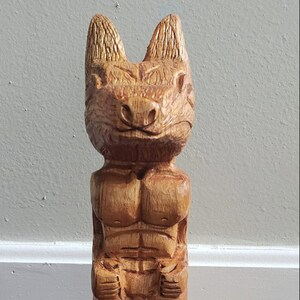
Who is Arọ̀ni? (Tani Arọ̀ni?)
Arọ̀ni is often depicted as a liminal being, neither fully human nor fully animal, moving between realms. Oral accounts describe him as having one leg like that of a human and another like that of a goat, marking him as a hybrid spirit who cannot be contained by ordinary categories. This physical duality reflects his symbolic role: a guardian of boundaries between people and the wild, between knowledge and taboo, between respect and desecration (Ojo 1997).
In many tales, Arọ̀ni appears to hunters ( àwọ́n ọdẹ ) or wanderers in the forest. He may offer them gifts of herbs and medicinal knowledge, but such gifts always come with a responsibility—to honor the forest, to use knowledge wisely, and to never betray the trust of the spirits. Those who fail to honor these conditions face misfortune, sickness, or even death. This dual nature—giver of blessings yet punisher of disrespect—makes Arọ̀ni a figure of ecological justice. He ensures that the forest cannot be reduced to mere timber, land, or commodity. Instead, it is a sacred trust.
The Forest as Sanctuary (Igbo gẹ́gẹ́ bí Ààfin Ìmọ̀lẹ̀)
In Yoruba thought, the forest ( igbo ) is not just “wild land.” It is the abode of spirits, a sanctuary of the unseen. Sacred groves like the Òṣun-Òṣogbo forest or the groves of Ogun and Ifa are preserved precisely because they are inhabited by deities and spirits. To cut a tree recklessly or to hunt indiscriminately in such places is to risk spiritual retaliation.
Arọ̀ni, as master of the forest, personifies this logic of protection. The myths place him as a “policeman of the wild”—ensuring that humans remember their limits. As one Yoruba proverb says: “Igbo ni baba òògùn; ẹni tí o bá fọ́ igbo, o ti fọ́ òògùn.” (The forest is the father of medicine; whoever destroys the forest destroys medicine.) Thus, the forest is both a physical habitat and a spiritual archive. In preserving it, humans preserve not only biodiversity but also ancestral wisdom and cultural survival.
Arọ̀ni as Protector of Balance (Olùdábàá Ayíká)
Arọ̀ni is not alone. Yoruba cosmology is populated with countless forest spirits ( ẹ̀mí igbo ), some benevolent, others dangerous. Monkeys, birds, snakes, and even insects may be considered vessels of ancestral spirits. Killing such animals without cause is taboo ( èèwọ̀ ). By enforcing these rules, the mythic system creates ecological balance. If hunters only kill with ritual permission, animal populations are preserved. If herbalists collect plants with offerings, biodiversity is maintained. Through Arọ̀ni, the forest itself becomes a self-regulating moral system.
Taboos (Èèwọ̀) as Conservation Laws
What modern environmentalists call “laws,” Yoruba traditions encoded as taboos ( èèwọ̀ ).
- It is èèwọ̀ to fell certain trees without ritual sacrifice.
- It is èèwọ̀ to fish in sacred rivers during specific months.
- It is èèwọ̀ to enter groves at forbidden times.
These prohibitions, often enforced through fear of Arọ̀ni’s punishment, function as traditional conservation policies. They limit human extraction, enforce rest periods for ecosystems, and preserve biodiversity.
Unlike modern laws, which rely on police or fines, Yoruba taboos relied on the belief in spirits. To Yoruba minds, Arọ̀ni himself was watching.
Festivals, Rituals, and Collective Memory
Yoruba festivals such as the Òṣun-Òṣogbo festival or the annual rites of Ogun often include processions into forests, sacrifices to riverbanks, and renewal of sacred groves. These rituals are not empty ceremonies—they are collective reenactments of ecological memory.
By dancing, singing, and offering to Arọ̀ni and other spirits, communities remind themselves of the pact: humans may benefit from the forest, but only in reverence.
Modern Environmental Lessons from Arọ̀ni
In today’s Nigeria, forests are vanishing due to logging, agriculture, and urban expansion. Climate change compounds the crisis. Yet Yoruba myths offer a cultural resource for sustainability.
- Sacred groves show how cultural beliefs can preserve biodiversity better than some modern laws.
- Arọ̀ni’s teachings remind us that forests are pharmacies—destroying them is destroying potential cures.
- Taboos suggest ways to frame conservation not as an external law but as a moral duty.
In fact, international conservationists increasingly recognize the role of “sacred natural sites” in preserving biodiversity (Oviedo and Jeanrenaud 2007). Yoruba traditions fit squarely within this model.
Conclusion
Arọ̀ni, the liminal guardian of the Yoruba forest, is more than a mythical curiosity. He is an environmental ethic in story form. Through him, Yoruba traditions teach that forests are sanctuaries, not commodities; that herbs are sacred, not just chemical compounds; that animals are kin, not mere meat. By reviving respect for Arọ̀ni and forest spirits, Yoruba culture offers not just heritage but also a blueprint for ecological survival in the modern age. In a world facing deforestation and climate crisis, the voice of the forest—Arọ̀ni’s voice—still calls us to remember that the earth is alive, and that guardianship is a sacred duty.