At a Passover Seder in Ostropol, a rich man watches Hershele eat and asks him what separates him from a pig. Hershele answers that the table does. I can’t think of a better piece of social criticism.
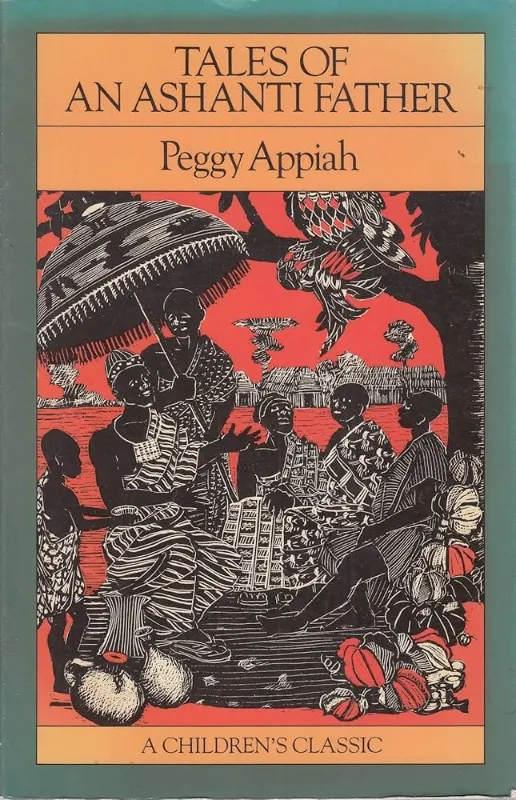
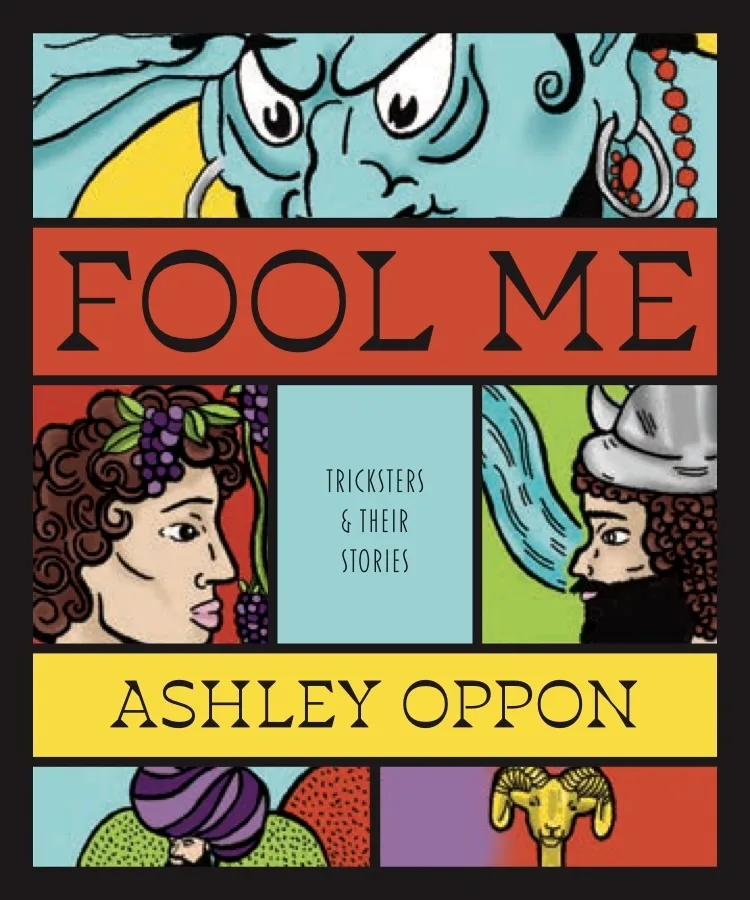
Oppon is a registered nurse and death midwife who also hosts a podcast called Dine with the Divine, and she begins the book by telling you where all of this comes from. Her father is Asante and put her to bed with Anansi stories when she was small, and she was bullied through most of her school years, the sort of child who wished she had a magic wand to do the dishes and who dreamed of what she might say or do to her bullies if only she were braver, or more violent. Stories about a small spider getting the better of much larger beings made her feel she might have a chance. She also grew up Catholic and heard constantly how perfect Jesus was, which she grants is lovely, though it didn’t help much when she was so obviously nothing like him. Every trickster in the book gets filtered through that girl, and it gives the writing a warmth I found hard to resist, since Oppon is plainly a fan of these characters and never talks down to them.
Each entry pairs a tale with some background on the figure, and the tales are where the book is happiest. Nasreddin is ferrying a scholar across rough water when the man tells him his bad grammar has wasted half his life, and a few minutes later Nasreddin turns around and asks whether the scholar knows how to swim. Till Eulenspiegel clears out an entire hospital by whispering to each patient that the sickest one will be burned to make the cure, after which the grateful doctor pays him and tips him besides. A clurichaun who has been tied up and marched into the woods by a greedy young man gets himself loose by knotting his scarf around a single tree, so that when the young man comes back with a shovel he finds a scarf on every tree in the forest.
Oppon is good on the material around the jokes as well. Nasreddin’s supposed tombstone carries the numbers 386, and scholars have argued over whether those are a date or a coded word meaning “to show,” which would make the stone his final riddle. Akhu Tonpa, the book tells us, was a real Tibetan serf, and his best-known tale involves a field cursed to grow penises that he then sells to a convent full of nuns. (A more nervous author would probably have left this out.)
My favourite moment in the book is in the Kutkh entry. Oppon quotes the eighteenth-century Russian ethnographer Krasheninnikov, who reported that the Itelmen of Kamchatka don’t worship their raven-creator at all and instead curse him for making so many mountains and swift rivers, and tell rude stories about him. Her advice to us is to simply observe him, and I loved that, because it comes from a book about honouring tricksters that pauses to admit that some people honour theirs by swearing at them.
A great many tricksters in the book were made by people who had no other weapons available. The serf behind Akhu Tonpa is one case, and Sri Thanonchai is another, since the book explains that in Ayutthaya free men owed the crown six months of farm labour and six months of military service every year. Br’er Rabbit and High John the Conqueror come out of slavery in the American South, and Anansi, as Oppon puts it in her introduction, crossed oceans to give hope to people in bondage. Her own childhood is more or less the thesis, and each new story seems to confirm it, so I kept wishing she would let it shape the book more than she does.
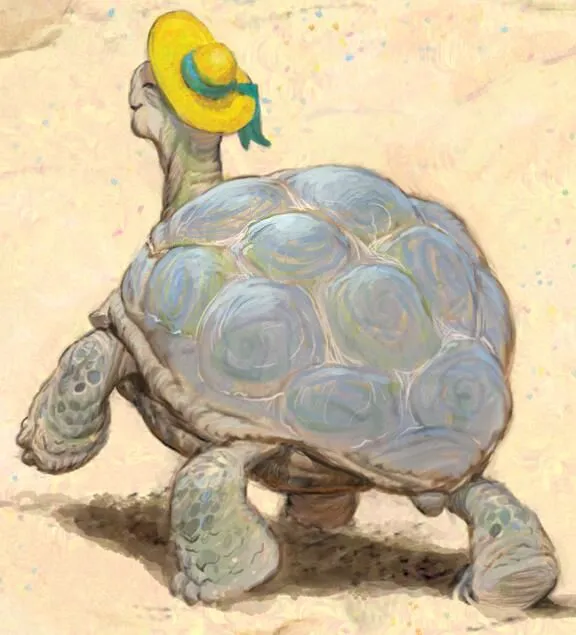
Where the book is thinner than it seems to realise is in its African material. The sub-Saharan chapter has only five entries, one of which opens with the story of a man hanged for murder in 1956, and there is no tortoise anywhere in it, which is an odd gap in a book that begins with a West African spider. (I noticed this more because we ran a feature on Mbe the Tortoise not long ago.) The Igbo and Yoruba tortoise tricksters could easily fill a chapter of their own. The bibliography has nothing on Anansi or Eshu and nothing on Akan or Yoruba religion, and Robert Pelton’s The Trickster in West Africa, the standard study, is not there either. The Xhosa and Zulu material leans on George Theal’s collection from 1886, and the Khoisan entry rests on a page from Mythopedia. Altogether the book has sixteen footnotes for some forty entries. Oppon says these figures deserve to be seen for the cultural significance they hold, and I agree with her, but the scaffolding is lightest exactly where the culture is African. Several of the retold tales, including Eshu’s, also carry no source, which means a reader cannot tell what has been handed down and what Oppon is telling in her own way.
The word trickster does begin to feel a little less precise as the book goes on, though I was happy to follow Oppon wherever she took it. She opens with the six traits that Hynes and Doty set out in Mythical Trickster Figures and then never returns to them, so a reader is left to wonder what the zār spirits are doing here (or the tokoloshe, who strikes me as less a trickster than a bogeyman). Oppon also says Krishna’s tricks are always harmless. I would like to hear Drona’s opinion on that.
Someone coming to tricksters for the first time will find Fool Me an easy book to love. I found myself rather fond of these strange creatures by the end.