The King and the Talking Drum
By Rese J

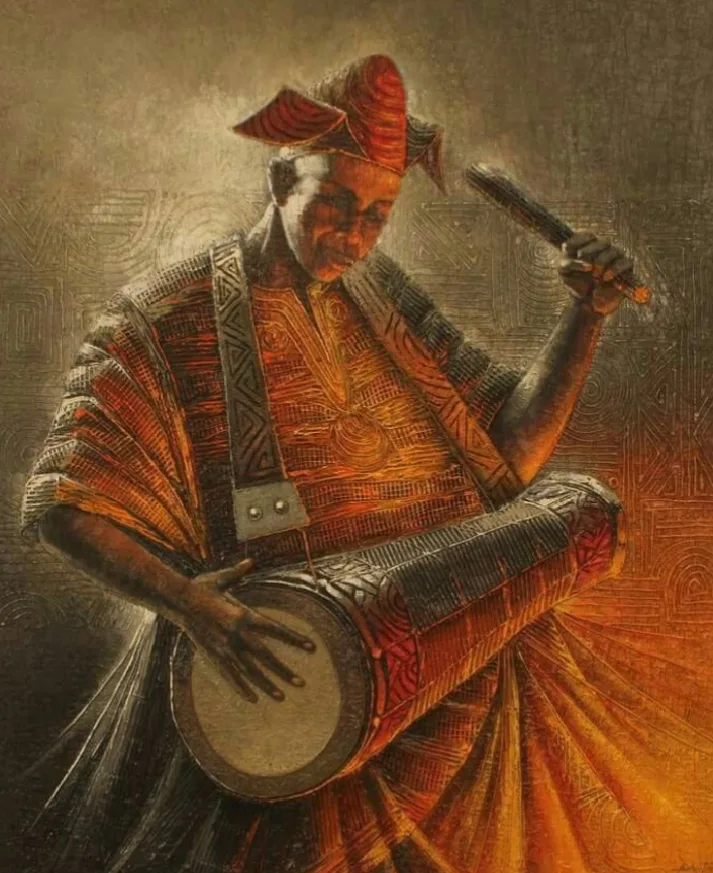
Long ago, in the heart of Yoruba land, there was a prosperous kingdom ruled by a wise but proud king. He was respected for his fairness and loved for his passion for music. Among his many treasures, one stood above all: a magical drum called the dùndún.
This drum was unlike any other. When struck, it did not merely produce rhythms; it spoke in a language everyone understood. Its voice carried across hills and rivers. It could summon hunters, announce celebrations, or warn of danger. For the Yoruba people, whose traditions were deeply rooted in oral communication, this drum was more than wood and hide—it was the lifeline of the community.
At first, the king used the drum for the good of his people. Whenever danger lurked, the drum called the hunters. When traders arrived, it summoned the market women. During festivals, it invited every household to dance. The kingdom thrived under its voice.
But in time, pride crept into the king’s heart. He grew jealous of the drum’s power. One day, he declared in the palace courtyard, “This drum belongs to me alone. No one else must touch it.”
The villagers bowed, but sadness filled their hearts. They knew the drum’s voice was for everyone, not one man. Yet fear of punishment kept them silent.
Then disaster struck. On a blazing afternoon, smoke rose from the market. A spark had grown into a raging fire. Flames devoured baskets of yams, bolts of cloth, and jars of palm oil. Panic spread. Mothers clutched their children, traders screamed for help, and strong men rushed with water, but the fire raged on.
Desperate, the villagers ran to the palace. “Kabiyesi! Kabiyesi!” they cried. “Let us use the talking drum! Let us call for help from neighboring villages before we lose everything!”
But the guards stood firm. “The king has forbidden anyone to touch the drum. His word is law.”
Helpless, the people watched their market—their livelihood—reduced to ash.
When the king returned from hunting that evening, he was met not with cheers but silence. The once-busy square was a blackened ruin. Children cried from hunger, women mourned their goods, and men hung their heads.
The king’s heart trembled. His pride had destroyed what generations had built. The drum, locked away, had been useless when his people needed it most. For the first time, shame filled him.
He summoned the people to the courtyard. His voice, once proud, was heavy with regret. “My people, I have learned a bitter lesson. A king who rules only for himself is no king at all. This drum was never meant for one man’s pride but for the good of all. From this day forth, the drum belongs to the community. Its voice shall guide, protect, and unite us.”
Relief swept through the crowd. The people rejoiced, not because of the king’s words alone, but because he had humbled himself. From then on, the drum became more than an instrument of sound; it was a symbol of unity, humility, and leadership that served the people.
The Yoruba say, “Ìwà l’ẹwà”—character is beauty. The story of the king and the talking drum teaches that true beauty lies not in power or possessions, but in good character. Pride can destroy communities, but humility and service bring people together.
And so, whenever the drum was heard in that kingdom—whether in times of joy or in moments of danger—it reminded the people of a lesson they would never forget: the strength of a community lies not in the pride of one leader, but in the unity of all its people.
Cultural Note
This folktale belongs to the Yoruba ethnic group, one of the largest in West Africa, mainly located in southwestern Nigeria, as well as in parts of Benin and Togo. The Yoruba are renowned for their rich traditions of storytelling, music, and oral history.
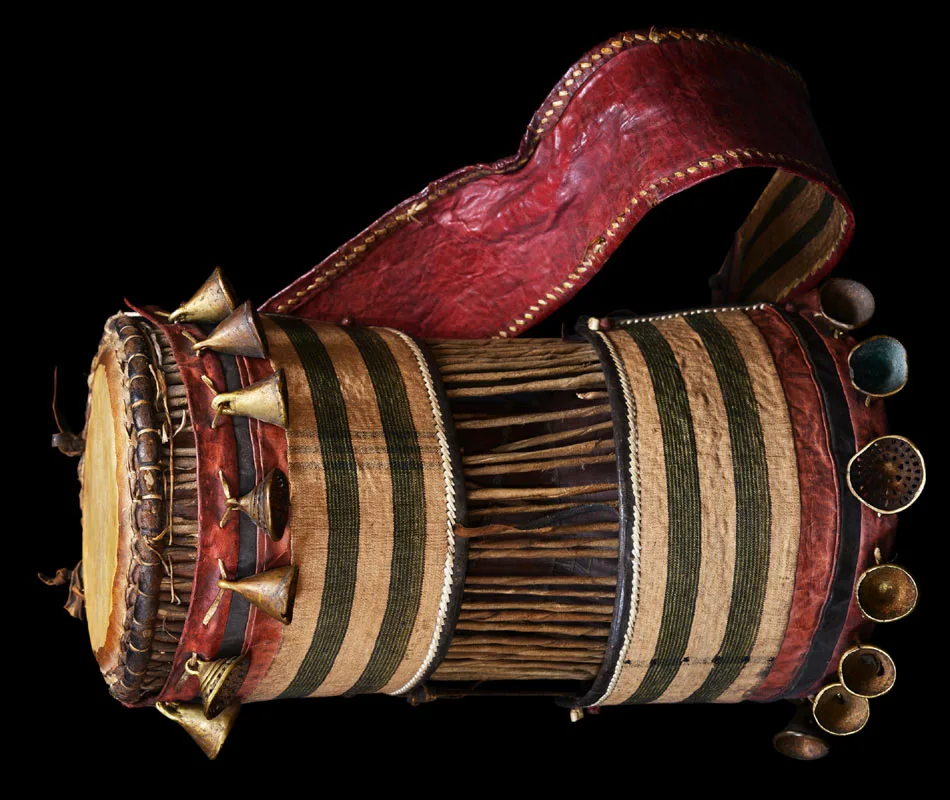
The talking drum (dùndún), which plays a central role in this story, is a cultural instrument capable of imitating the tones of human speech. Traditionally, it has been used to entertain, praise, and communicate across distances. The drum embodies Yoruba values of unity, collective responsibility, and the belief that leadership and resources must serve the whole community, not just the individual.