Katangwan: The Giant of Kagoro
By Shallom Paul

Long ago, when the Kagoro hills still whispered to hunters and streams sang to farmers, there lived a giant whose name is remembered with awe: Katangwan. To the people of Kagoro, known as the Oegworok in Southern Kaduna, he was not a character of imagination but a living truth. His story continues to echo across generations, etched in footprints that remain on the rocks and in the flowing spring that still bears his name.
They say Katangwan was born many centuries ago, living for three centuries. Unlike ordinary children, he arrived already tall for his age, measuring three feet at birth. By his first birthday, he towered at fifteen feet, growing faster than the millet stalks in the rainy season. When he reached maturity, he was said to stand close to ninety-eight feet high, as tall as the modern Nagwamatse House in Kaduna State, which is the tallest building in Kaduna Metropolis. His stature placed him beyond comparison with any other mortal, but his greatness was not in his height alone—it was in his justice, wisdom, and courage.
Katangwan was a leader, feared in battle yet trusted in peace. When disputes broke out among hunters over the ownership of a kill, the matter was brought before him. Rather than argue endlessly, the hunters placed the animal at Katangwan’s feet. With a stretch of his long arms, he would drop the animal at the home of the rightful owner. His judgment was never questioned, for he was believed to have insight beyond ordinary men.
As a warrior, Katangwan was unmatched. In times of war, he led the Kagoro into battle. His towering frame struck fear into enemies, and his spear—which was as long as a palm tree—brought countless victories. His people say that wherever he fought, no enemy could withstand him. Yet despite his power, he was no tyrant. He carried himself with dignity, serving not only as a defender but also as a symbol of justice.
Because no house could contain his massive height, Katangwan lived in a cavern within the Kagoro hills. The cave, surrounded by its own ecosystem, became both his home and fortress. Inside, when he leaned against the stone walls, it was said he could pull down whole cattle to eat. His appetite was legendary, forcing him to cultivate vast stretches of farmland and hunt large game to sustain his strength. His water flowed from a special spring on the hills, now called Udong Katangwan, which still runs cool and clear today.
His footprints remain visible near the hilltop—deep impressions in the rock left by his massive feet. As his end drew near, Katangwan foresaw his own death. True to his nature as a man who prepared for all things, he dug a trench large enough for his body. When his time came, he lay down peacefully in the grave he had made, and the earth covered him.
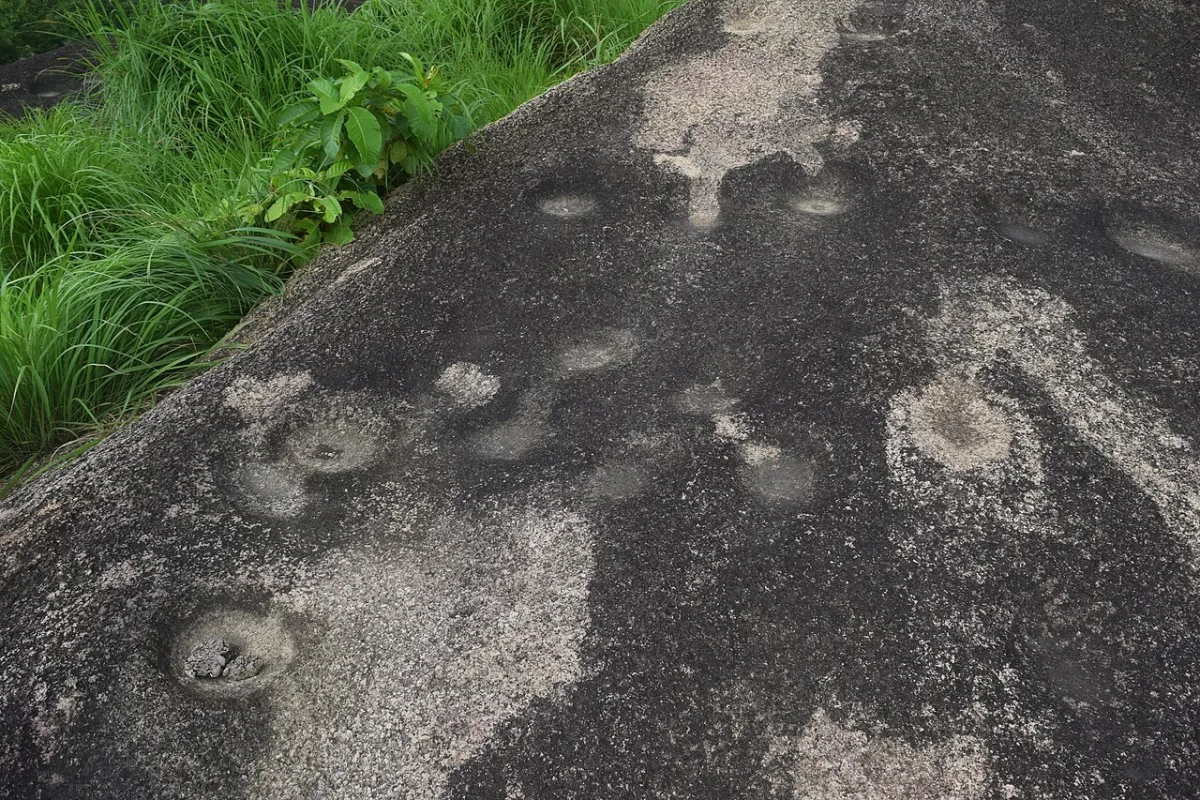
Fig 1. Katangwan’s footprints in the Kagoro Hills.
Even in death, Katangwan’s presence did not fade. His grave, his cave, and his footprints are treasured in Kagoro as sacred reminders of his existence. To the people, he was more than a man—he was believed to be the son of the great god of the Oegworok, a gift to guide, defend, and protect. Today, when visitors journey to Southern Kaduna, they are shown these sites with pride.
Today, the memory of Katangwan lives on in descendants. Ezra Suwanta Zako, popularly called Ezra Dogo, is regarded as the tallest man in Kaduna State at nearly seven feet tall. Many believe him to be a reincarnation of Katangwan, carrying the legacy of the giant into the present age.
Thus, the tale of Katangwan is not just a myth. It is history woven with wonder, binding the Kagoro people to their hills, their heritage, and their god who dwelt among them.
Origin Note
The tale of Katangwan comes from the Kagoro (Oegworok) people of Southern Kaduna State, Nigeria. The Kagoro are part of the larger Atyap ethnic cluster, known for their deep ties to the Kagoro hills, which serve as both cultural and spiritual landmarks. Katangwan is remembered as their greatest giant—a half-spirit, half-human figure whose footprints, spring, and grave remain visible today. The story functions as a cultural anchor, reinforcing identity, justice, and communal pride among the Kagoro.